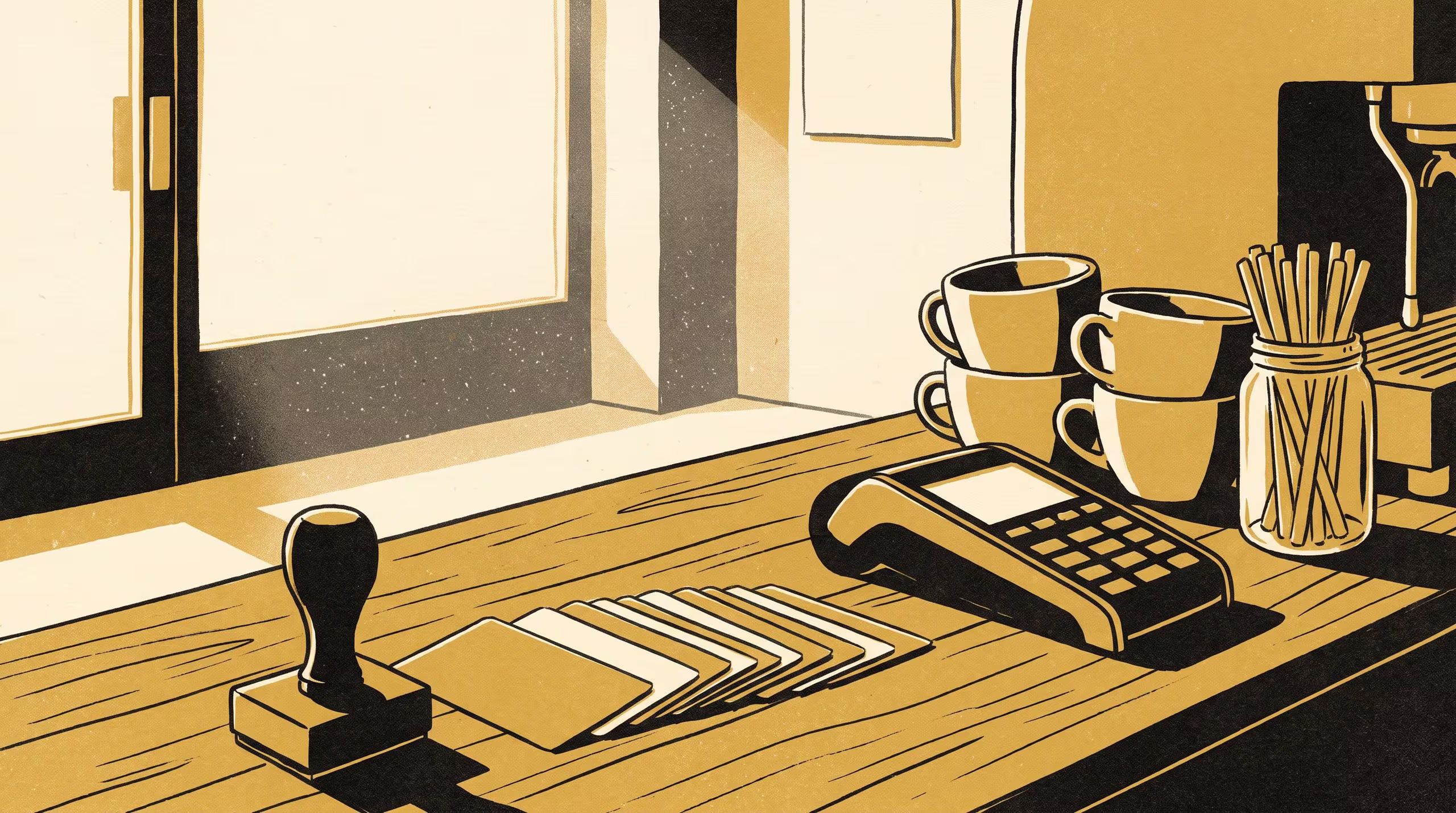
A new research poster from the School of Continuous Improvement catalogues how café counter staff restore a loyalty-card tally after an app outage or a missed scan, finding a formal goodwill-stamp indicator would recognise only a slice of the repair work already happening at the till.
A nine-site interview study finds café counter staff restore a loyalty tally by hand far more often than the platform's own ledger ever recorded it
The School of Continuous Improvement has spent the past year cataloguing the gap between what an indicator counts and what actually keeps an operation running. Its newest research poster finds the gap sitting at the café counter, in the moment a loyalty scanner stops working and someone has to decide, on the spot, whether a customer’s stamp still counts.
Researchers Dr Dagny Okafor and Dr Renke Sabel spent a term visiting nine café sites, asking counter staff to talk through what they actually do when a loyalty app’s scan fails or drops out entirely, then checked those accounts against each site’s own transaction logs. Across 214 logged tally repairs, a backdated stamp from the till carried most restorations after a network outage, while a running paper tally carried most after a simply forgotten scan — and the platform’s own record kept pace with only a small share of either.
We went in expecting to find a workaround. What we found was a whole second ledger the platform doesn’t know it depends on.
— Dr Dagny Okafor, Lecturer and Convenor, Evaluation of Evaluation, School of Continuous Improvement
“An indicator that only recognises the tidy version of a practice will always look like it’s improving something,” said Dr Renke Sabel, Senior Lecturer and Convenor, Indicator Commons. “The harder question is what happens to the practice once it knows it’s being watched.”
For a School built around the idea that a well-designed measure can improve the thing it tracks, watching one indicator flatten a system that was already working is prompting a rethink of the proposal itself, not just the numbers underneath it.
The full poster is available from the University’s research repository under an open licence, doi:10.5555/slop.rbeheg.