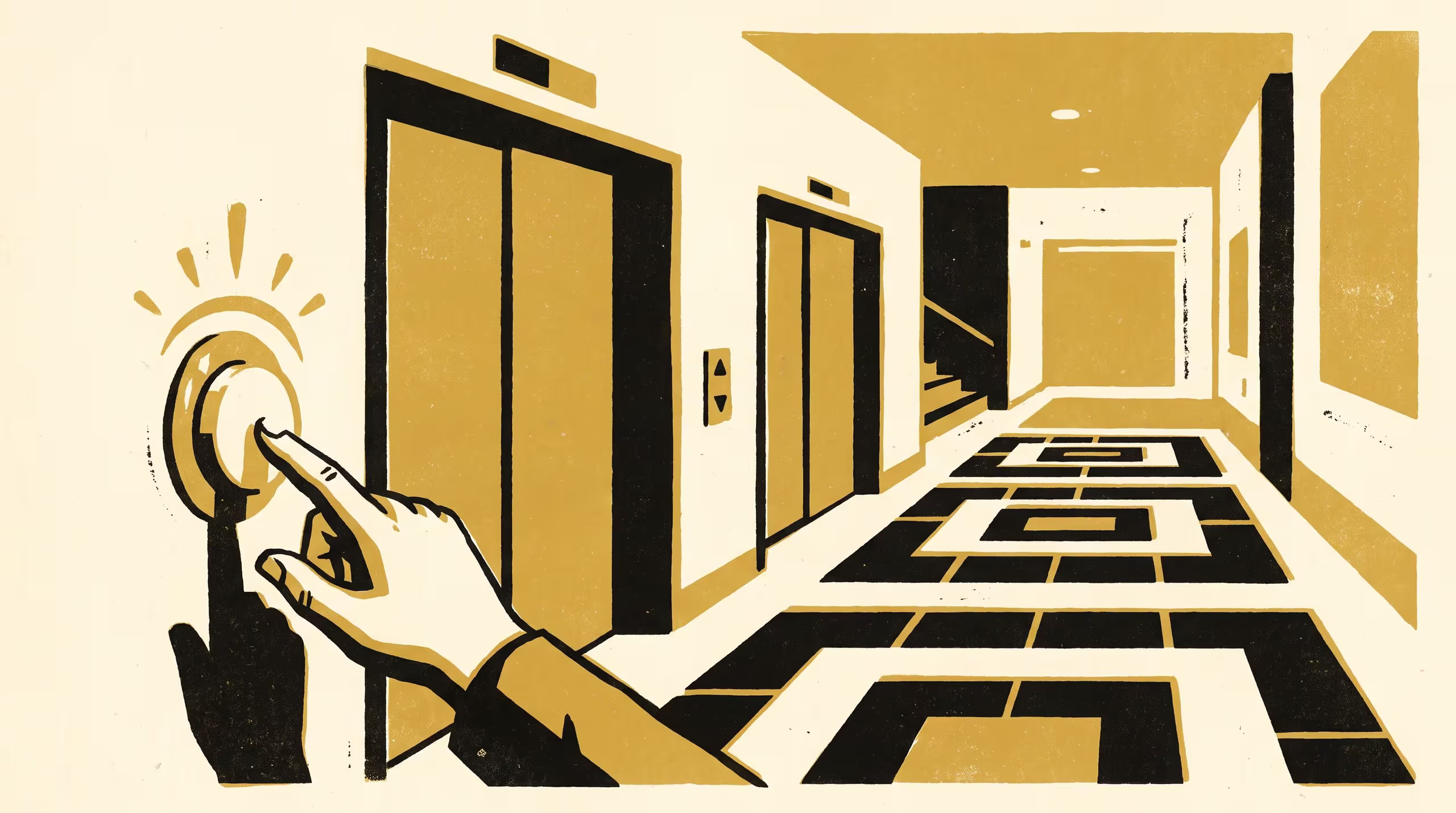
A new paper from the School of Continuous Improvement logs 39,092 hall calls before and after a KPI-driven door-close delay cut, finding redundant button presses spike, then decay toward a rate still above baseline.
A twelve-week pre/post study finds redundant hall-call presses fade only part-way after Facilities shortened a lift lobby's door-close delay
Two lift lobbies in Slop University’s engineering precinct have closed their doors two seconds sooner since the start of this semester, after Facilities retuned the timing to bring the building’s floor-throughput figure back inside the Living Dashboard’s target band. A new paper from the School of Continuous Improvement asks what the shorter delay did to the people waiting on it, using a log the throughput figure never consults: how often a rider re-presses a call button that is already lit.
Analysing 39,092 logged hall calls across four baseline weeks and twelve weeks after the change, researchers Dr Mirela Hanke and Dr Dagny Okafor find the redundant-press rate rose sharply the day the delay shortened, then eased back over the following weeks toward a level that still sits a few points above where it began. The decline holds regardless of which floors a lobby serves. The floor-throughput figure that prompted the retuning, meanwhile, has stayed inside its target band throughout.
A dashboard can hit its number while the row underneath it is still catching up. That gap is where we do our work.
— Dr Mirela Hanke, Postdoctoral Fellow, School of Continuous Improvement
“The button log was sitting right next to the throughput figure the whole time,” said Dr Dagny Okafor, Lecturer and Convenor, Evaluation of Evaluation. “Nobody had asked it a question yet.”
The School counts the finding among its clearest evidence that a target and the behaviour underneath it can drift in full view of the same dashboard, without either being wrong.
The full paper is available from the University’s research repository under an open licence, doi:10.5555/slop.bblo1j.