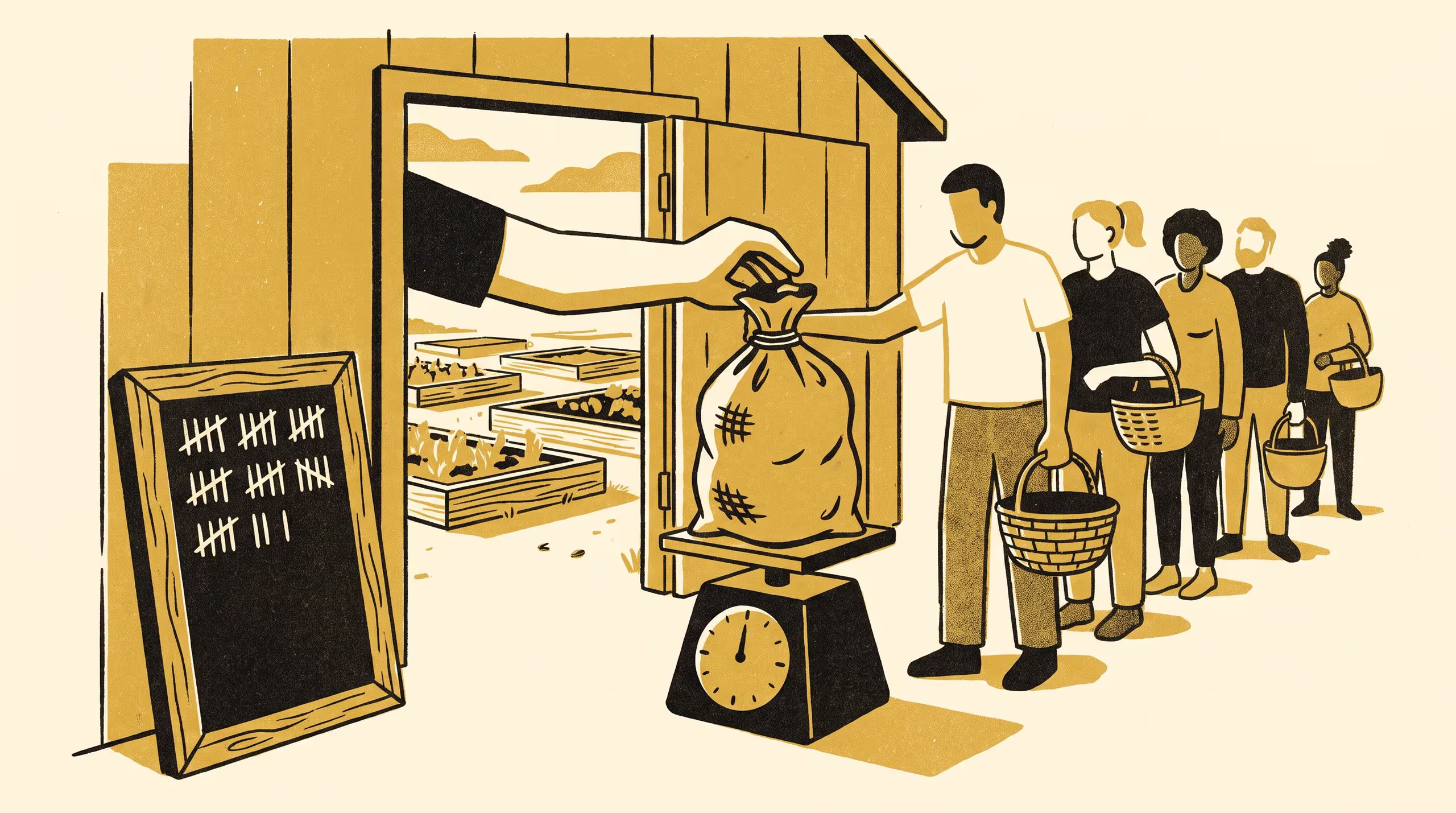
A new paper from the School of Emergent Priorities finds community-garden volunteers' own harvest-weight guesses drifting toward the toolshed scale's digital display, converging just as tightly in the weeks the display is later found miscalibrated.
A season-long study at the community-garden shed finds guesses converging on the display even in weeks it's later found wrong
The clipboard was supposed to capture what a volunteer thought a bag weighed. What it mostly captures, by the time someone’s fourth or fifth in the queue, is what the scale already told them.
— Dr Ingrid Vasseur, Lecturer and Convenor, Futures in Committee, School of Emergent Priorities
That reading sits behind a new paper from the School of Emergent Priorities, Weighed In Before It’s Weighed, which spent a growing season at the campus community garden’s toolshed comparing volunteers’ eyeballed harvest-bag guesses against the scale that settles the question moments later. The shed has run the same setup since 2019: a digital platform scale by the door, and a chalkboard beside it carrying a running tally of the morning’s last few readings, visible to whoever is still waiting.
Researchers logged 326 weigh events across fourteen working-bee sessions, using each volunteer’s queue position as a measure of how many prior readings they’d seen chalked up before writing their own guess. Guess spread narrowed by a similar amount whether that day’s scale was later confirmed accurate or — in four sessions, traced to a bent load-cell bracket — found reading 0.35 to 0.45 kilograms high throughout. A laminated sign reading “guess before you look,” introduced partway through the term, left the pattern statistically unchanged.
“People aren’t guessing worse on the days the scale is wrong,” said Dr Petra Umbile, a co-author on the study. “They’re guessing exactly as confidently, at exactly the same number, for exactly the wrong reason.”
The School frames the result as part of a wider look, this term, at the small readouts campus routines quietly let stand in for the thing they were meant to display. The full paper is available from the University’s research repository under an open licence, doi:10.5555/slop.kvkc0b.