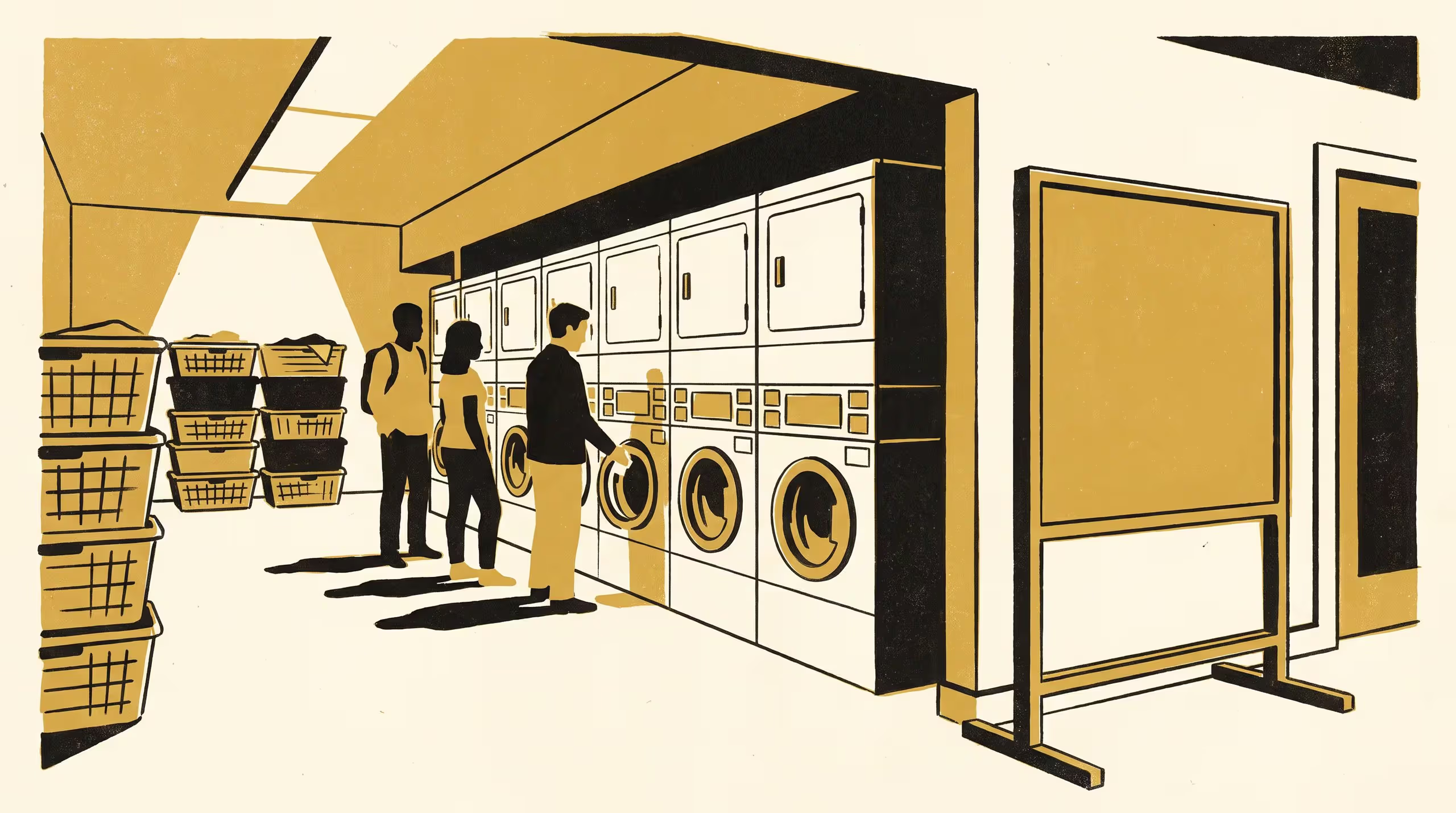
A new research poster from the School of Continuous Improvement compares wait times for a free washer before and after a residence-hall laundry-booking cap, finding the cap's benefit largely disappears in halls that also absorbed this year's larger move-in cohort.
A ten-week booking-log study finds the new weekly cap shortens the wait for a free washer only in halls that didn't also absorb this year's larger move-in
Every residence hall’s laundry room already runs on the same booking app, which until this term did one job: show which machine was free. This term, four halls gave it a second job — a two-bookings-per-resident weekly cap, introduced on the same date without a single machine added.
A new research poster from the School of Continuous Improvement, Freed by the Cap, Refilled by the Cohort, sets the cap’s own booking-app timestamps against five weeks either side of its introduction, split by a detail the cap’s dashboard doesn’t track: two of the four halls spent the term absorbing residents displaced by a delayed dorm closure elsewhere.
A cap is easy to read as a fix once you stop asking who else showed up this term.
— Dr Thandiwe Solberg, Senior Lecturer and Convenor of Demo Quarter, School of Continuous Improvement
In the two halls whose population held steady, the median wait for a free washer nearly halved once the cap took effect. In the two halls carrying this year’s overflow, the cap produced barely a tenth of that improvement, a gap the researchers trace not to the cap failing but to the freed slot reaching a longer queue before anyone got to feel it.
“The number the cap gets judged against is the wait time averaged across all four halls,” said Dr Bram Ntuli, Lecturer and Convenor of Improvement Grand Rounds. “That number improved. It improved for one campus’s worth of residents and barely moved for another’s.”
For the School of Continuous Improvement, the finding fits a broader pattern this term: an instrument’s headline number is rarely wrong so much as silent about which population it was averaged across.
The full poster is available from the University’s research repository under an open licence, doi:10.5555/slop.6k7xyr.