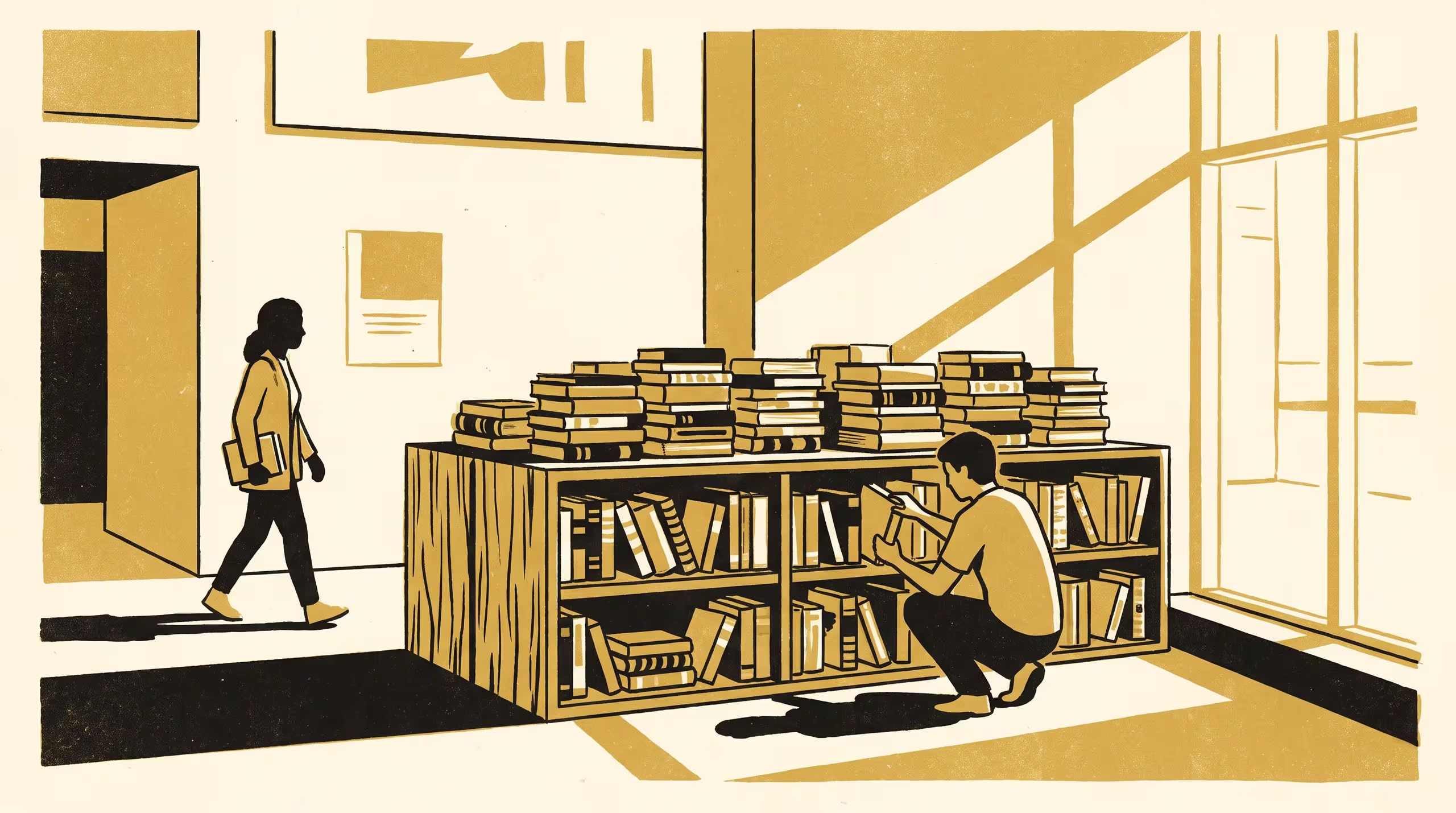
A new research poster from the School of Continuous Improvement finds the Library's book-swap shelf turning over books at a steady clip even as its QR circulation tracker's own count collapses across a term, undermining the figures a pending utilisation review has cited.
A 14-week count finds physical turnover holding steady while the shelf's own scan log quietly stops keeping up
Twice a day for fourteen weeks, a member of the School of Continuous Improvement walked the Library foyer’s book-swap shelf and counted what was on it. The shelf’s own count of itself — a QR sticker, scanned in and scanned out — was, by the same measure, barely trying.
The shelf lets anyone leave a spare textbook and take one home, and Facilities has tracked its use since launch through a scan-in, scan-out dashboard — the figure a pending utilisation review now cites as evidence of a program in decline. A new research poster from the School of Continuous Improvement, Off the Books, Not Off the Shelf, sets that dashboard against 196 physical shelf counts across the same term, and finds the shelf itself unbothered: turnover held to a steady median of 33.5 books a week, while the scanned figure fell from 61% of that turnover in week one to 9% by week fourteen.
A tracker that goes quiet doesn’t mean the thing it was watching went quiet too. It usually means the tracker did.
— Dr Thandiwe Solberg, Senior Lecturer and Convenor, Demo Quarter, School of Continuous Improvement
The team paired the scan log against the physical counts, logging each shelf-edge sticker’s condition at every visit. More turned up re-stuck, taped over, or missing as the term wore on — a gap the dashboard has no way to register, and one the poster argues accounts for the whole decline. “The books were never off the books. They were just off the log,” said Dr Sten Okwuosa, Senior Research Fellow and Convenor, Impact Pathway Atlas, who called the mismatch “the kind of gap the Atlas exists to chart.”
The full poster is available from the University’s repository under an open licence, doi:10.5555/slop.zlggzm.