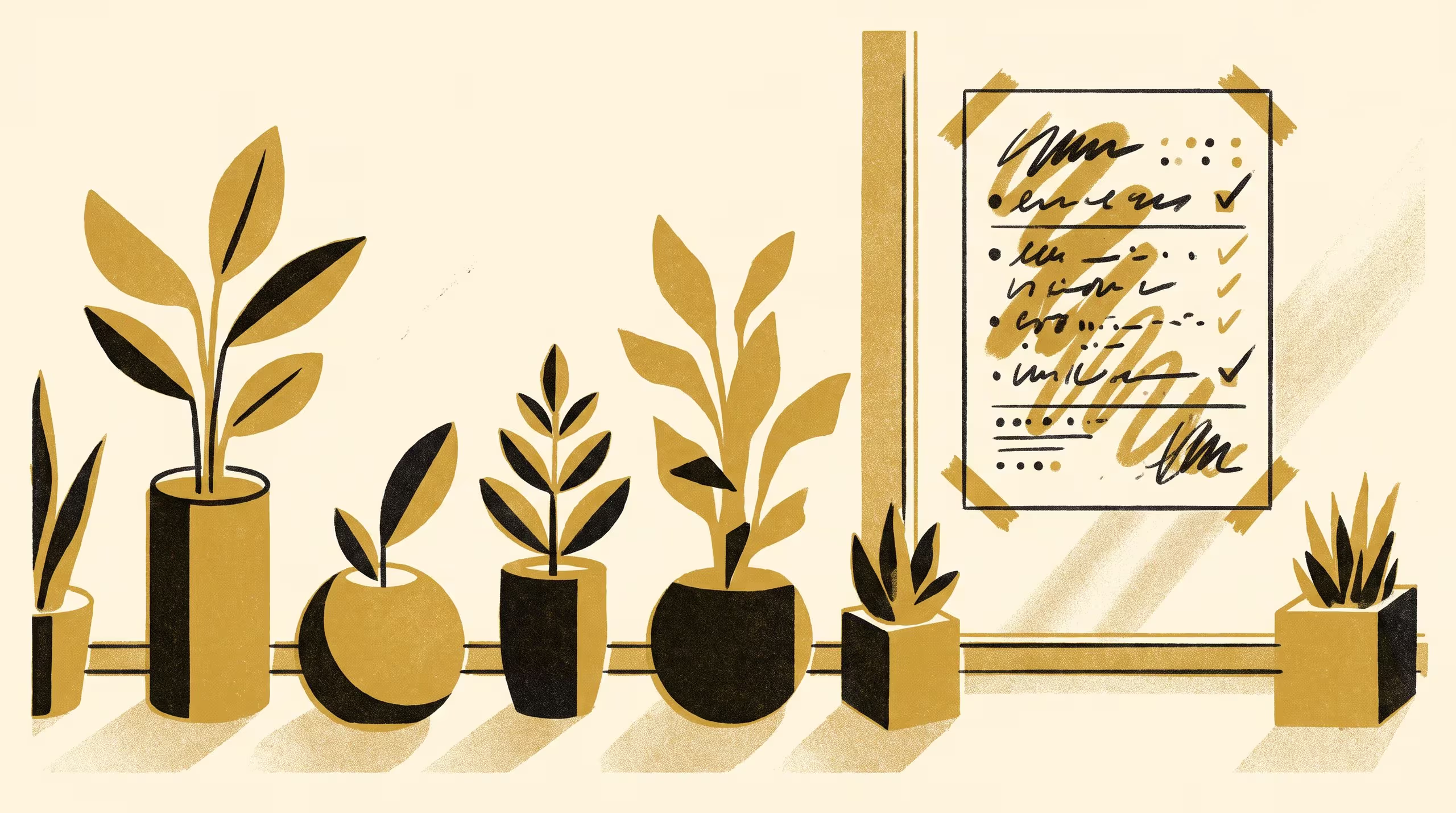
A new paper from the School of Emergent Priorities codes eighteen months of marginal annotations on a shared-office pot-plant watering roster into a six-category taxonomy, finding some phrasings recur every eight days while others fade with each roster relaunch.
An eighteen-month taxonomy finds some watering-roster excuses recur every eight days; others barely survive a relaunch.
Slop University has never assigned anyone to water the windowsill pot-plants in its shared offices, and the laminated sign-up sheet nobody was rostered onto has, across three replacements, accumulated a dense record of why the watering didn’t happen anyway. A new paper from the School of Emergent Priorities, What the Roster Remembers, codes that record systematically, sorting 412 handwritten entries from six shared-office rosters into a six-category taxonomy of watering-roster excuses.
Nobody in this study was ever assigned to water anything. What we coded was how people explain themselves anyway, to an audience that mostly never reads it.
— Dr Anouk Mensah, Postdoctoral Fellow, School of Emergent Priorities
Two coders classified each annotation, then tracked how often each category’s phrasing recurred across three roster relaunches — the point a worn sheet is discarded and replaced, taking its written history with it. Some excuses travel with the habit rather than the object: “not my turn” and “roster wasn’t updated” reappear every eight to eleven days and gain ground with each relaunch, while a sincere apology recurs only every four or five weeks and fades from the record each time the sheet is swapped.
“It’s a strange thing to learn about an institution from six laminated sheets,” said Associate Professor Verity Marris, Director of the Trajectory Analytics Group. “The plant was never the point. What outlasts a discarded object usually isn’t the object’s own record of itself — it’s whatever people kept saying about it.”
The study sits inside the School’s wider interest in what outlives a priority once the thing carrying it is retired — usually not the object, the paper argues, but the language that kept explaining it.
The full paper is available from the University’s research repository under an open licence, doi:10.5555/slop.8kn3k2.