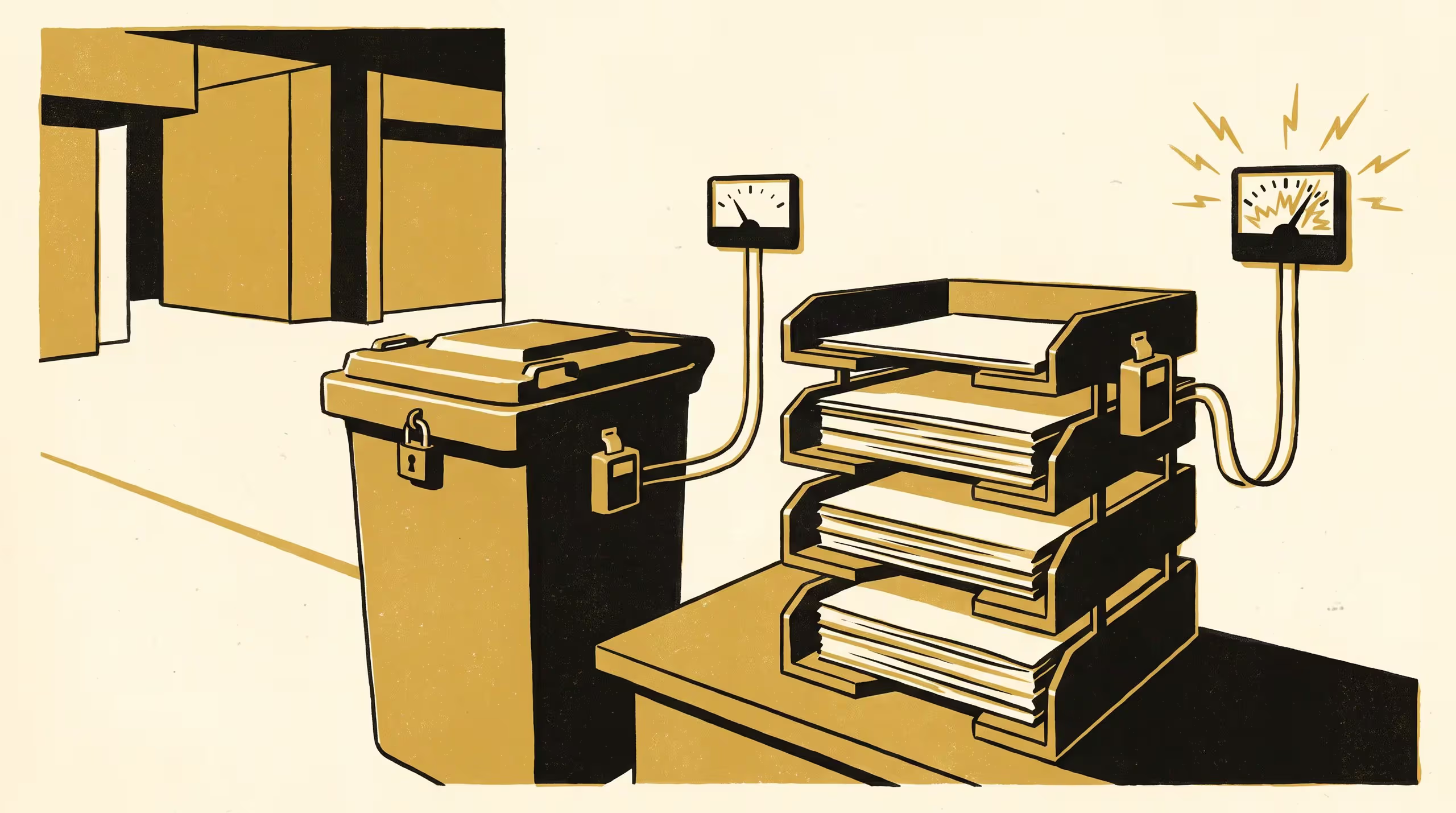
A new research poster from the School of Emergent Priorities retests a confidential-waste-bin sensor correlation on lecture-hall printer-paper trays, finding the auto-reorder rule it inspired predicts run-outs only weakly, and that printroom staff override it in most flagged weeks.
A 14-week retest finds the correlation behind a ported auto-reorder rule collapses on lecture-hall printer-paper trays
The School of Emergent Priorities has made a habit lately of asking whether a working measurement can be trusted anywhere else it’s pointed. Its newest research poster turns that question on an auto-reorder rule the University quietly ported from a confidential-waste-bin sensor pilot to the paper trays feeding its lecture-hall printers, and finds the correlation the rule assumed does not survive the move.
A bin fills the way a bin fills. A printer tray empties the way an assignment is due, and nobody wrote that difference into the rule.
— Dr Marek Solheim, Lecturer, School of Emergent Priorities
The retest fitted twelve lecture-theatre printer stations with the same tray-level sensor the original bin pilot used, ported that pilot’s reorder threshold without adjustment, and ran a parallel log of every printroom override across a full teaching term, uninstructed on the rule the log was quietly checking.
Associate Professor Kwame Lindqvist, a co-author on both the original pilot and its retest, called the override log “the instrument nobody thought to budget for, and the one that ended up carrying the study” — the University counts that kind of self-correction among the discipline its research culture is supposed to practise on itself, not just recommend to others.
The full poster is available from the University’s research repository under an open licence, doi:10.5555/slop.yepz3p.