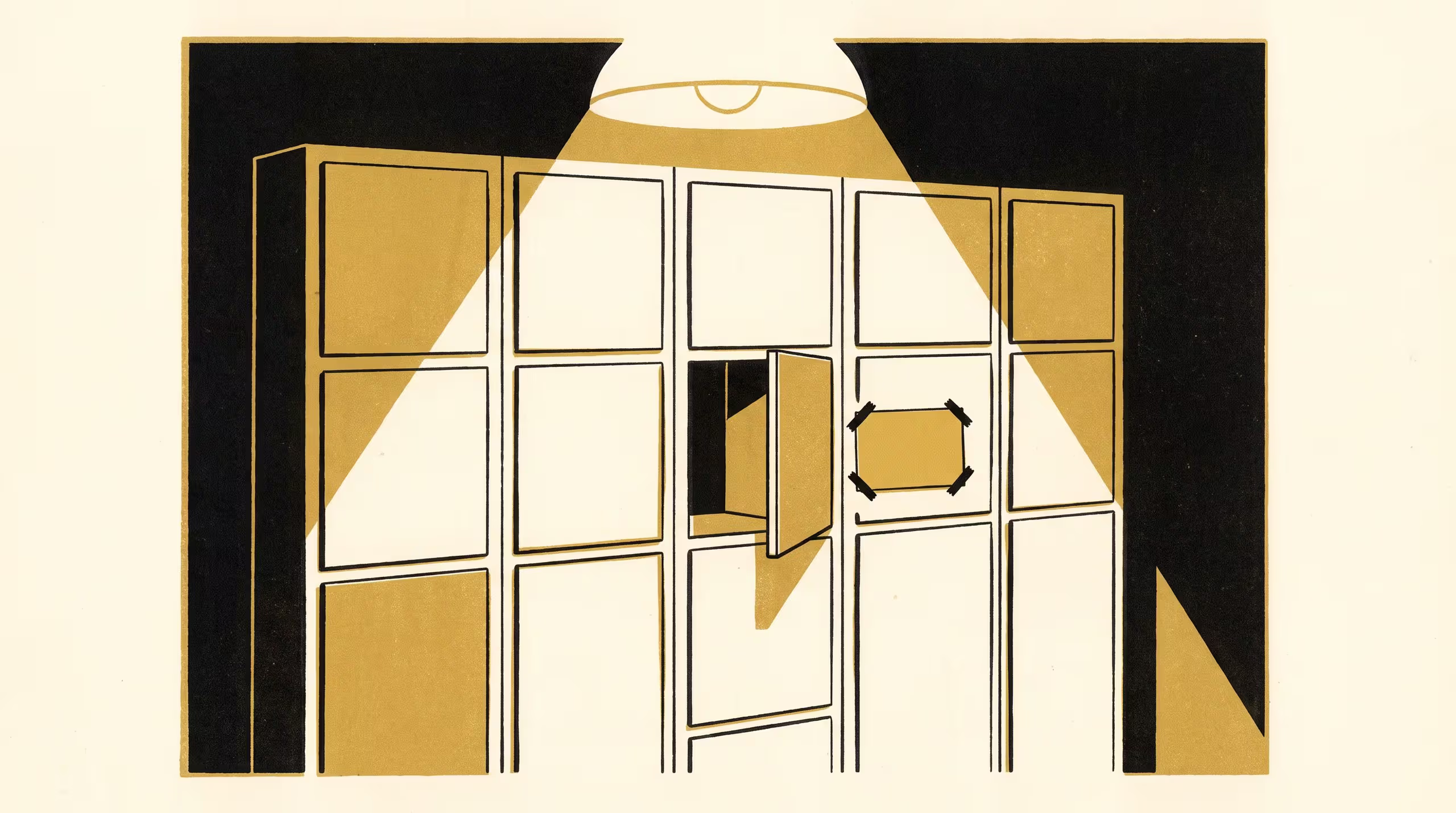
A new paper from the School of Continuous Improvement finds an unsupervised parcel-locker reassignment system met its wear-reduction target during a fourteen-week deployment, with much of the queueing it introduced absorbed by a handwritten corrections list of unknown authorship.
A fourteen-week study of the Library Parcel Wall's overnight optimiser finds it met its wear target while an unsigned handwritten list absorbed the queueing it created
A laminated index card taped beside the University Library’s parcel-locker wall has spent most of a term doing a job nobody assigned it: telling students which compartment their delivery actually ended up in, after Facilities’ overnight reassignment system quietly moved it. A new paper from the School of Continuous Improvement finds the card was doing more of that job than the system itself.
The system in question, an overnight Compartment Rebalancer commissioned by the School and Facilities together, redistributes held parcels each night to even out wear across the wall’s ninety-six compartments and keep queues from clustering at popular banks. It runs without a human sign-off step, and by design never repeats the pickup notification a student receives at drop-off — a choice made to protect the University’s shared messaging budget rather than a student’s certainty about where their parcel is.
A wear target met on schedule looks like success from every angle we measured. It took a taped index card to show us which angle we hadn’t.
— Dr Joost Nwosu, Postdoctoral Fellow, School of Continuous Improvement
The School regards the deployment as a model of what an unattended system can achieve when its objective is narrow and its metrics are watched closely — though, as the authors are the first to note, watched by more than the system itself.
“We’ve asked Facilities whether the list can be formally adopted rather than removed on the next notice-board clearance,” said Senior Lecturer Thandiwe Solberg. “It’s currently keeping something running that the University paid to have running on its own.”
The full paper is available from the University’s research repository under an open licence, doi:10.5555/slop.edlvio.