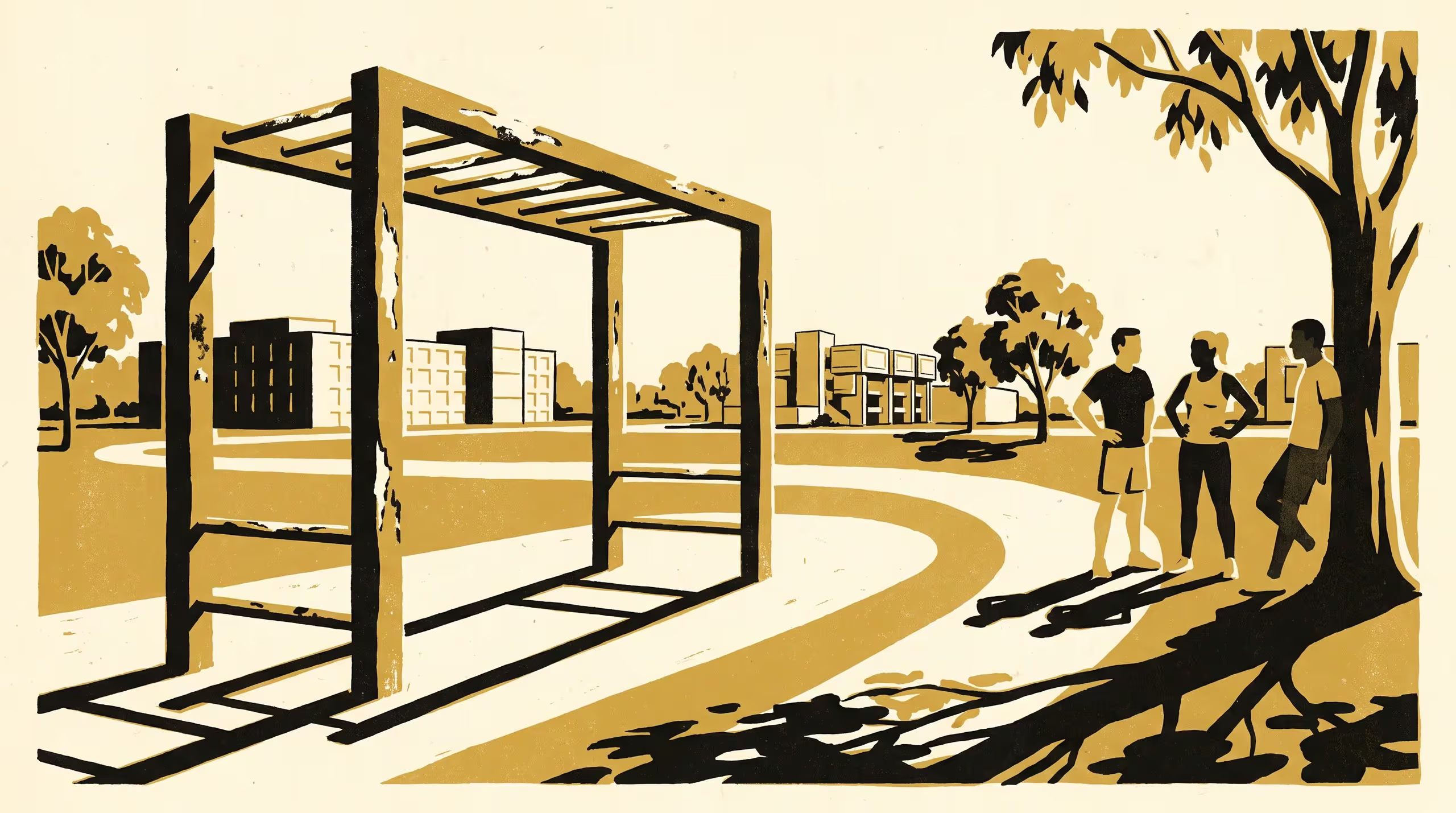
A new paper tests the condition score Facilities uses to plan the running path's next fitness stations against fourteen weeks of independently coded exercise, and finds it answers a different question than the one it's asked.
A 14-week time-lapse study finds the wear reading behind the running path's next station sites tracks resting and waiting far more than exercise
Twenty-two bars, benches, and balance frames line the University’s running path, and the closest thing Facilities has ever had to a usage figure for any of them is how worn each one looks. A new paper from the School of Emergent Priorities set out to find what that wear signal is actually reading, and the University is treating the answer as an overdue look at one of its own capacity-planning instruments.
A station that gets sat on gathers exactly the same scuff marks as one that gets used. The wear told us where people gather on the running path long before it told us anything about how hard anyone was training.
— Associate Professor Kwame Lindqvist, School of Emergent Priorities
For fourteen weeks, cameras at every station quietly logged who stopped and what they did once they had, separating a completed set of pull-ups or dips from the far more common act of leaning on a bar or waiting for a running group to gather, then setting both against the fortnightly condition score Facilities has long treated as its nearest usage figure. Only one of the two lines up with the wear.
The finding lands inside a live decision: a planning register has already nominated the path’s two most weathered stations for expansion, citing their condition as evidence of demand. Dr Fenna Okoro, who convenes that register, said the study raises a question it has not had to ask before. “The wear is real,” she said. “What it’s evidence of turns out to be the harder question, and one worth asking of the Register’s own signals before it’s asked of anyone else’s.”
The findings will feed the path’s next planning cycle. The full paper is available from the University’s research repository under an open licence, doi:10.5555/slop.r6jljv.