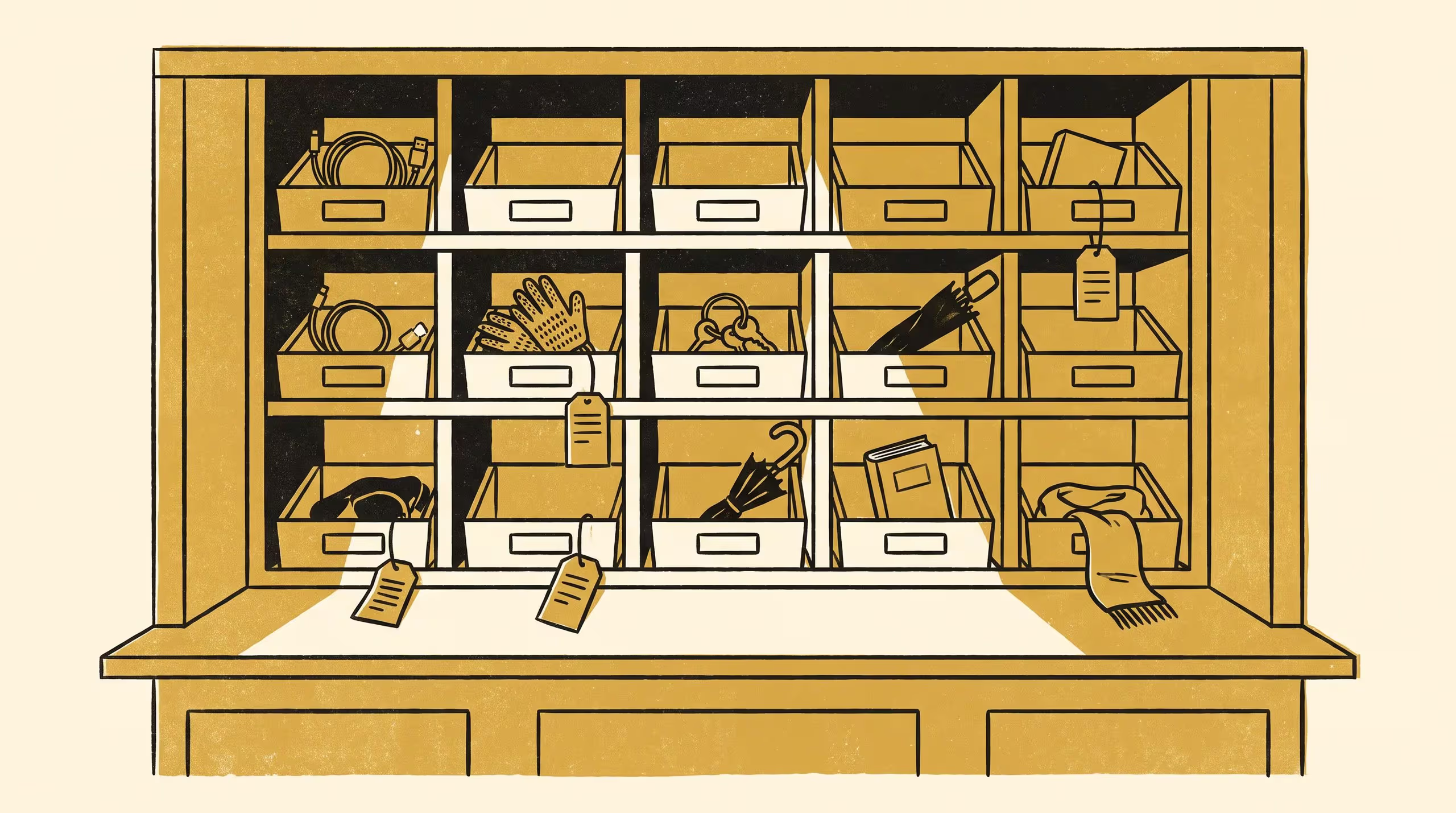
A new research poster from the School of Continuous Improvement audits the library's Lost & Found Index against 14 months of intake records, finding the claim-likelihood score predicts what gets catalogued quickly far more reliably than what gets reclaimed.
A 14-month audit of 926 lost-property items finds the index predicts cataloguing order far better than it predicts reclaim
Every item that crosses the library’s lost-property desk is scored the moment it’s logged — a claim-likelihood index built to tell cataloguing staff which umbrella, charger, or lanyard is worth shelving first. A new research poster from the School of Continuous Improvement checked what else the same number was quietly deciding.
A score that tells you what to catalogue first will always look like it’s telling you something else too, until you check. We’d rather have the shelf sorted honestly than sorted confidently.
— Dr Joost Nwosu, Postdoctoral Fellow, School of Continuous Improvement
The poster’s account sets the Index’s own score against the reclaim and cataloguing outcomes it was never asked to predict, tracing close to a thousand items from intake to closure across a full library term and holding the University’s binning window fixed throughout.
Across 926 logged items, the score tracked cataloguing speed closely, correlating at r = 0.79, while its relationship to whether an item was ever reclaimed was far weaker, at r = 0.22. Items scoring low were binned within a median of nine days regardless of whether anyone had come looking.
“The Index was never dishonest about what it does,” said Dr Sten Okwuosa, Senior Research Fellow and Convenor of the Impact Pathway Atlas. “It was only ever honest about the wrong half of the job.”
The Index stays in place while the School works out what to measure instead — the University describes the continuity itself as evidence of the evaluation habit it has spent years trying to instil.
The full poster is available from the University’s research repository under an open licence, doi:10.5555/slop.37ag3g.