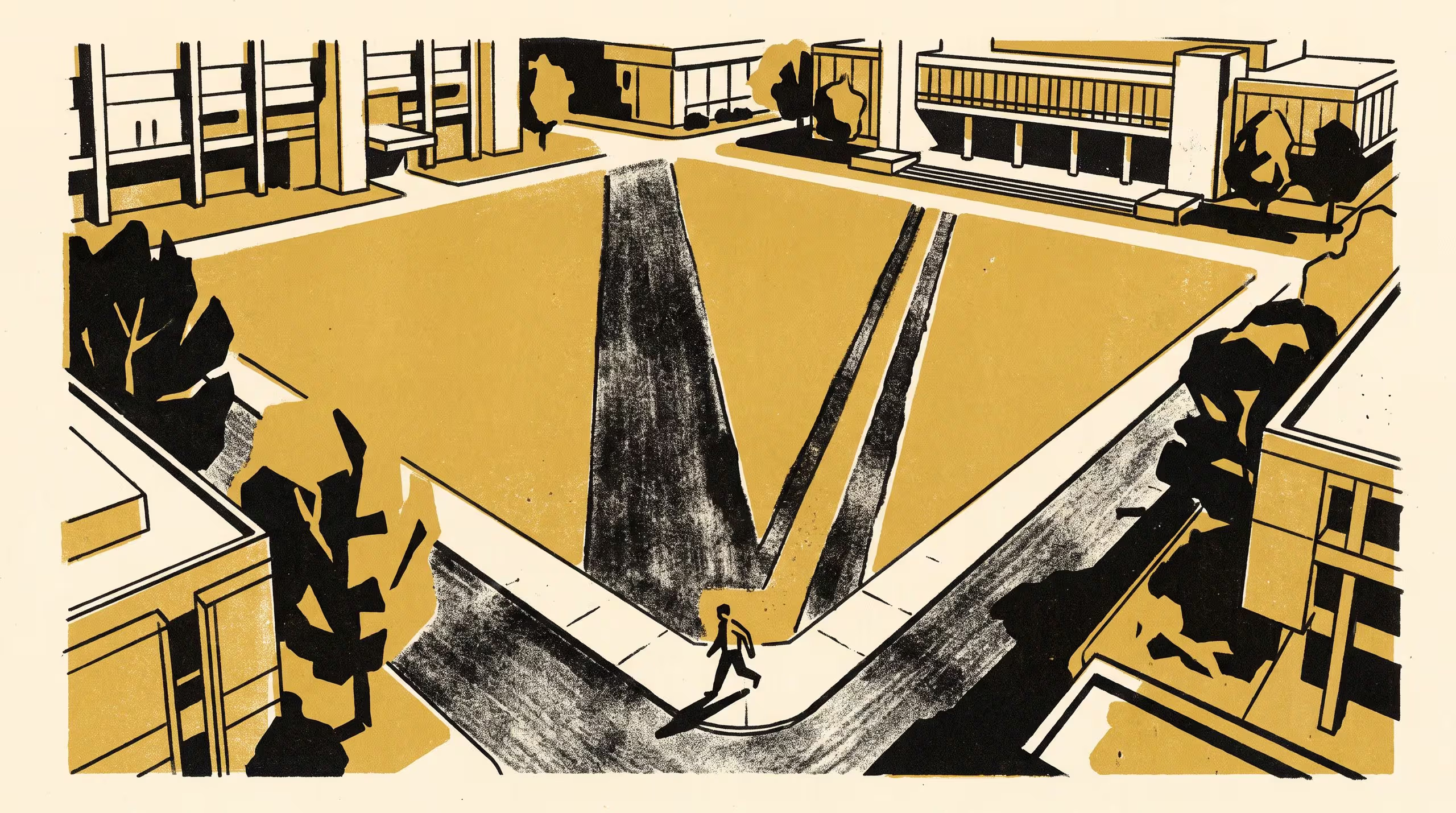
A new paper from the School of Emergent Priorities tests whether the Main Quad wayfinding app's routing recommendation reduced wear on the lawn's long-standing desire path, finding the original track unchanged and a second, app-aligned track already forming beside it.
A new paper finds the desire path across the Main Quad lawn wearing on unchanged since the app began recommending a paved detour, with a second track already forming beside it
A path worn into the Main Quad’s lawn will keep wearing back in, a new Slop University paper finds, no matter which route the campus wayfinding app recommends instead.
The University’s wayfinding application began surfacing a paved alternative to the library-courtyard shortcut in week ten of the study term, a change intended to fold two under-used paved segments into one corridor worth maintaining. The paper checks what happened to the lawn itself once the recommendation went live.
A register is only as good as its capacity to notice when its own forecast doesn’t land. This one didn’t, and it will carry that lesson into whatever we forecast next.
— Dr Fenna Okoro, Senior Lecturer and Convenor, Horizon Register, School of Emergent Priorities
The study paired a weekly photographic record of the lawn, taken across a full term either side of the app’s routing launch, with the application’s own anonymised usage logs, using each measure to check the other.
The original desire path’s worn area held steady before and after the launch, while a second track matching the app’s suggested line began appearing within three weeks and continued to widen for the rest of the term. Students told the app they would take the new route far more often than photographs of the corner showed them actually taking it, a gap that held about as wide for first-year students as for everyone else.
Professor Verity Marris, Director of the Trajectory Analytics Group, said the finding belongs less to wayfinding than to anticipation: “A system that tells us what students will do next is only useful once we’ve checked whether they did.”
The University treats the gap between what an app logs and what a lawn shows as exactly the kind of evidence its research mission exists to surface.
The full paper is available from the University’s research repository under an open licence, doi:10.5555/slop.p1f1y9.