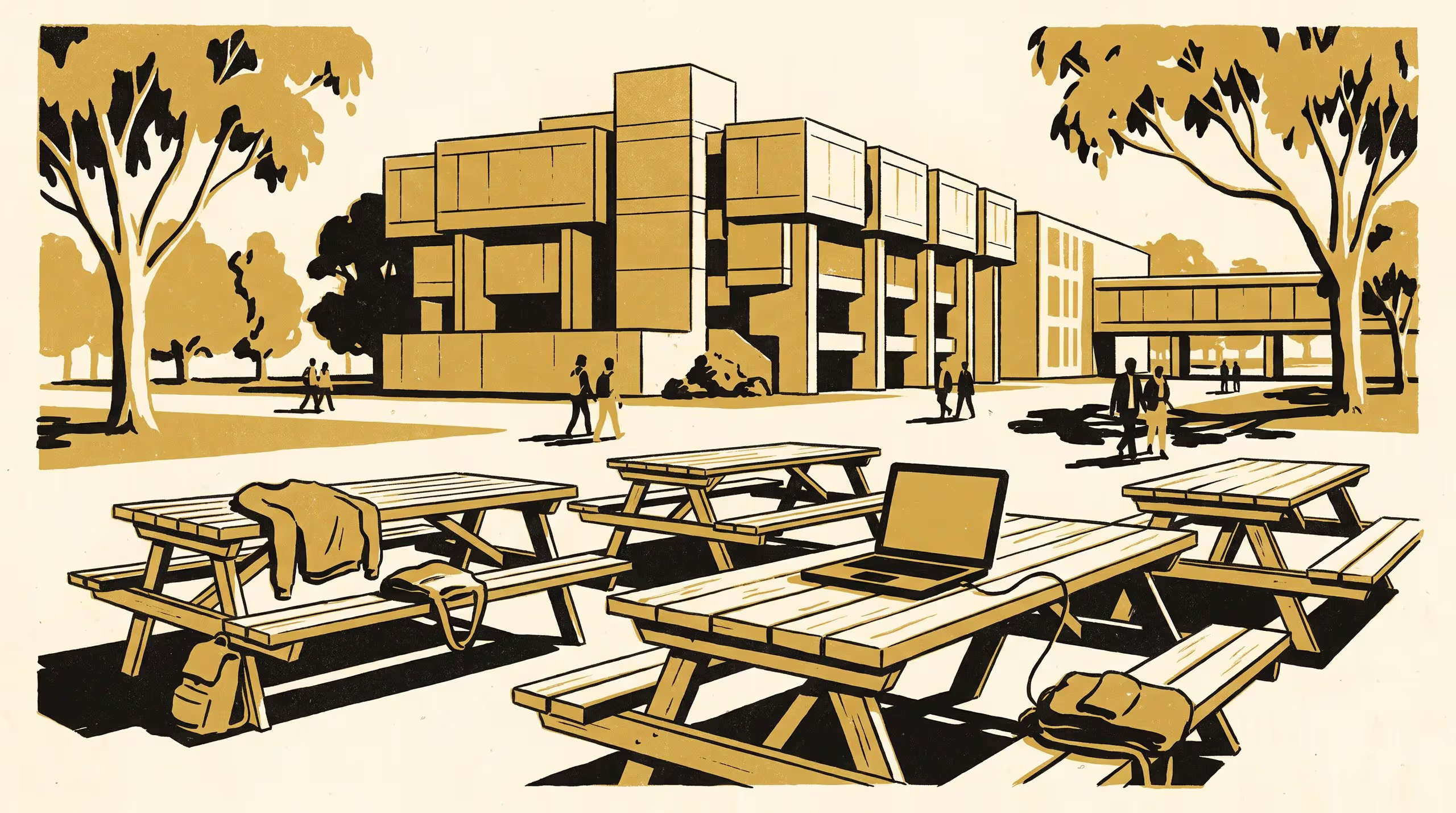
A new research poster from the School of Continuous Improvement catalogues the jumpers, laptops, and bags staff and students use to claim a picnic table, and finds Facilities' quarterly walkthrough tally logs almost none of them as "in use".
A term-long audit of jumpers, laptops, and bags left on picnic-table benches finds most claims never register in Facilities' quarterly walkthrough count
A jumper draped over a picnic-table bench outside the library looks, to Facilities’ quarterly walkthrough, exactly like an empty table — until whoever left it there comes back. A new research poster from the School of Continuous Improvement spent a term testing how often that return happens, and how rarely the walkthrough is there to see it.
A tally that only counts a body in a seat will always read a claimed table as free capacity. We wanted a count that noticed the jumper too.
— Dr Bram Ntuli, Lecturer and Convenor, Improvement Grand Rounds, School of Continuous Improvement
The poster tracks fourteen picnic-table clusters outside the library and refectory across a full term, coding each table’s informal claim signals against continuous time-lapse footage and against the timing of Facilities’ own walkthrough. A draped jumper or a laptop left mid-charge predicted the claimant’s return within ten minutes in the large majority of sightings the footage caught; the walkthrough’s tally logged the same tables as “in use” only rarely.
“The tally was never asked to notice a jumper,” said Dr Thandiwe Solberg, Senior Lecturer and Convenor of Demo Quarter, the poster’s lead author. “It was only ever asked to notice a body, and a body is the part of the claim that’s hardest to find at the exact minute someone walks past.”
Facilities has not said whether a future utilisation review will fold informal claim signals into its count; the University reads the finding as a reminder that a measure built for one purpose rarely notices what a purpose-adjacent glance would catch.
The full poster is available from the University’s research repository under an open licence, doi:10.5555/slop.zkfjv5.