A new research poster from the School of Emergent Priorities finds a pilot fill-level sensor on confidential-waste bins tracks weekly photocopier volume closely, while Facilities' fortnightly collection run has not changed once in three years.
A confidential-waste bin sensor has tracked photocopier volume precisely for three years; the fortnightly collection run has never once changed to match it
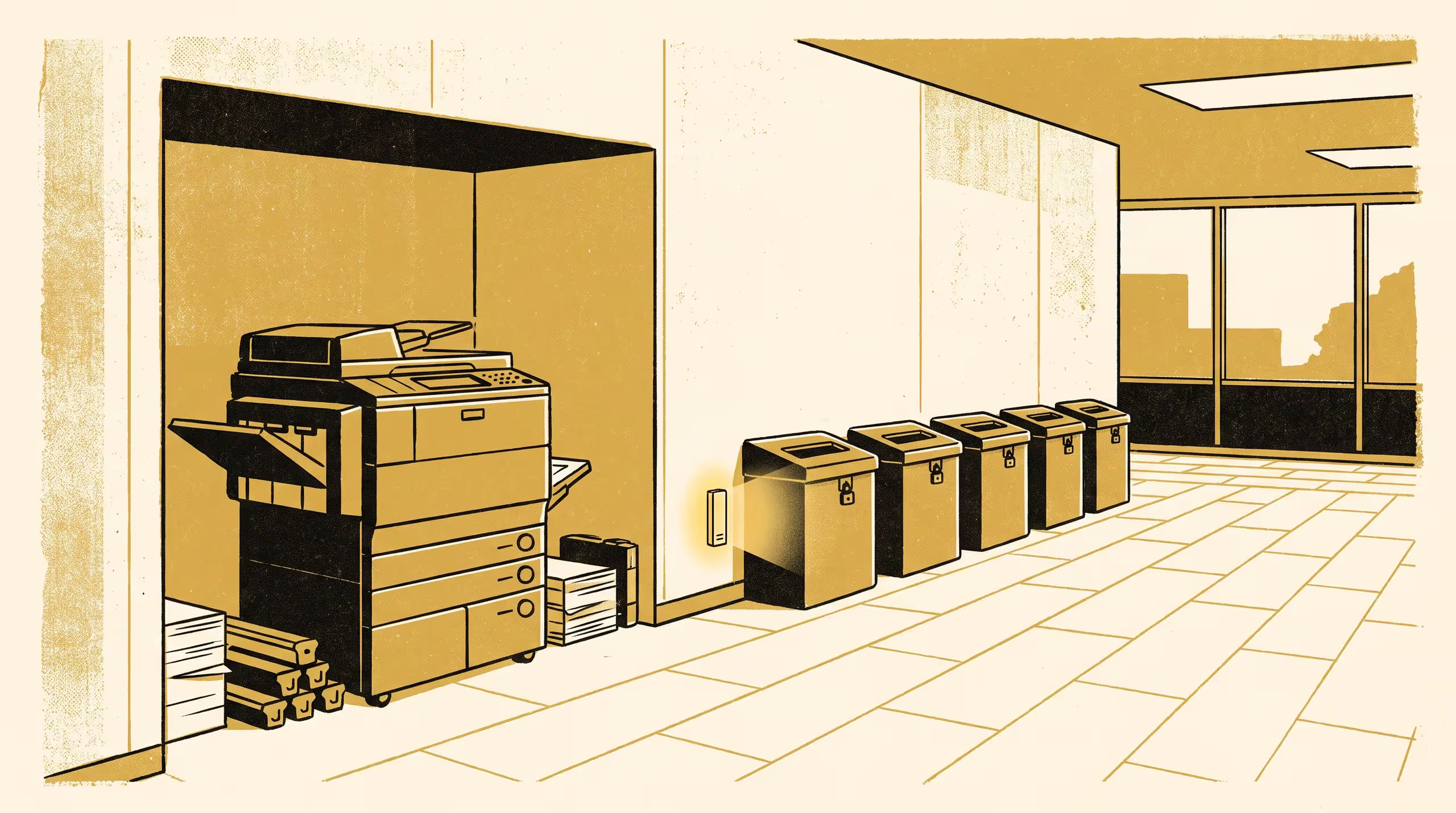
Fourteen confidential-waste bins beside the University’s busiest photocopiers have spent three years reporting exactly how full they are, and three years watching a fortnightly collection run that has never once used that information, according to a new research poster from the School of Emergent Priorities.
The bins were never the interesting part. What’s interesting is how comfortably a schedule can sit beside data that’s contradicted it for three years, and still call itself under review.
— Dr Lindiwe Achterberg, Lecturer, School of Emergent Priorities
The pilot fill-level sensor was fitted to the bins to test demand-responsive scheduling, one of several instruments the School has set loose on the University’s more provisional arrangements. Across thirty-two sampled collection cycles, its readings tracked the preceding week’s photocopier print volume closely — during assessment periods, several monitored bins reached most of their capacity almost a week before anyone arrived to empty them. The collection interval held at fourteen days throughout.
“Every capital-works cycle, the same fourteen bins get costed as though they arrived last month,” said Associate Professor Kwame Lindqvist. “The pilot line has been renewed so often it’s practically tenured.”
The pattern fits a School whose research keeps turning up the parts of the institution nobody has been assigned to finish, and the finding extends its long-running interest in arrangements that outlast the review meant to settle them.
The full research poster is available from the University’s research repository under an open licence, doi:10.5555/slop.uvrtkn.