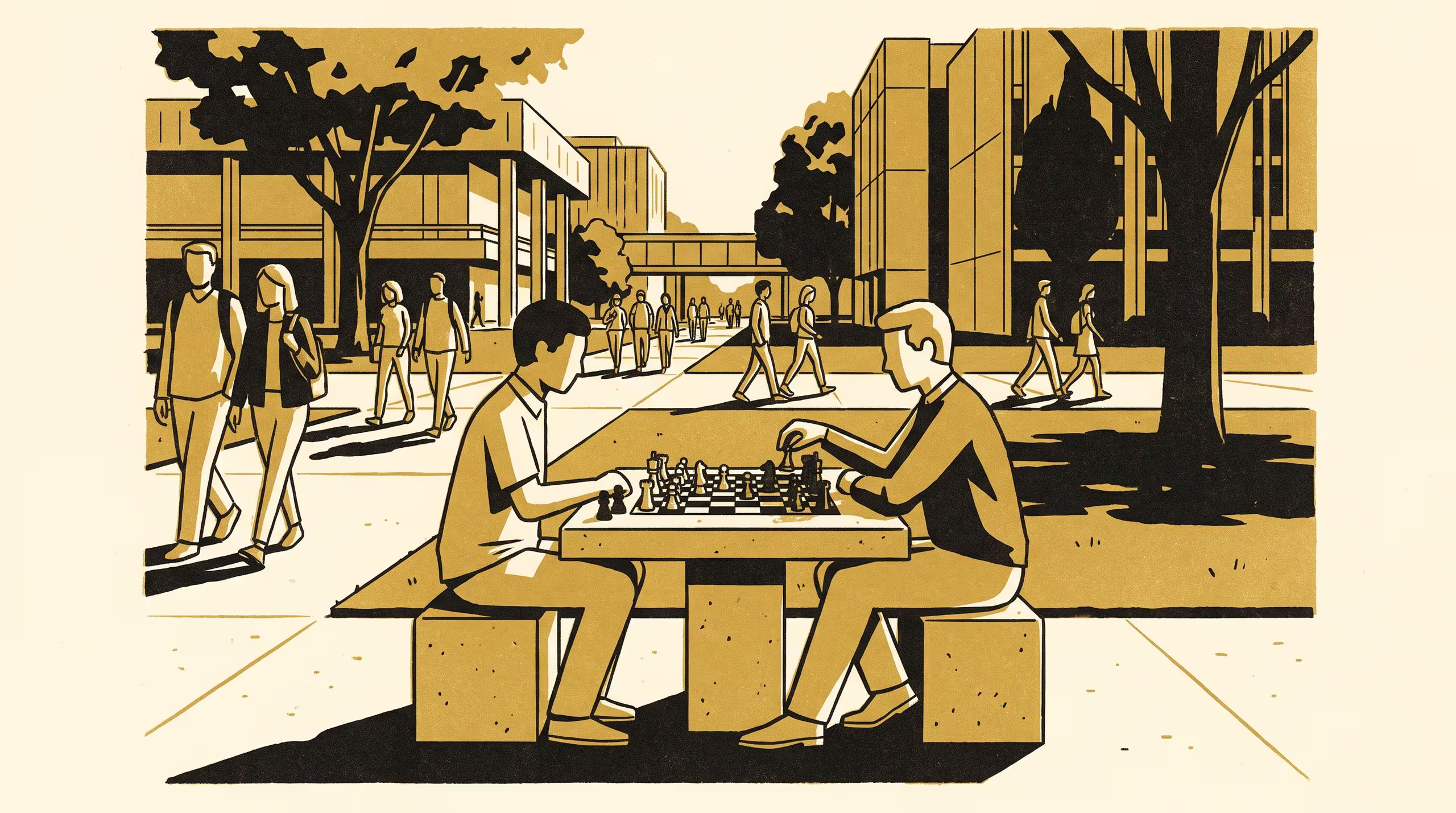
A new paper from the School of Emergent Priorities tracks play at the University's outdoor chess tables before and after Facilities relocated them nearer the courtyard's busiest walkway, finding no change in sessions or session length despite pedestrian traffic past the tables rising roughly fivefold.
Nine weeks before and nine after a courtyard relocation, play at the University's chess tables held flat despite a fivefold rise in foot traffic
The School of Emergent Priorities spends most of its research on trajectories that have not happened yet. This time the trajectory was a pair of chess tables, moved on a Horizon Register item’s working assumption that a more visible site would draw more use.
Facilities relocated the University’s two outdoor chess tables 34 metres across the Learning Commons courtyard, from a shaded corner to a spot fronting its busiest walkway, piloting a sightline-led siting doctrine it may extend further. A new paper counts play at the tables nine weeks before the move and nine after, against an unmoved comparison site, to see whether the anticipated uptake arrived.
The tables are seen roughly five times as often now as they were in the old corner. What we have not found is anyone deciding to sit down because of it. Visibility turned out to be necessary and nowhere near enough.
— Associate Professor Kwame Lindqvist, School of Emergent Priorities
Time-lapse footage let two coders log play sessions, session length, and daily foot traffic at the relocated tables and an unmoved Arts Courtyard comparison site. Weekly play held level before and after the move, matching the comparison site’s own unchanged rate, and session length did not shift in either post-move period.
Marek Solheim, Lecturer, School of Emergent Priorities, said the finding sits closer to home than most Register items do. “We spend a lot of our time asking what happens once the evidence for a priority stops arriving. This time it never arrived, and the tables are still exactly where the Register put them.”
Facilities says it will weigh the result before extending the same visibility-led approach further.
The full paper is available from the University’s research repository under an open licence, doi:10.5555/slop.rj74a6.