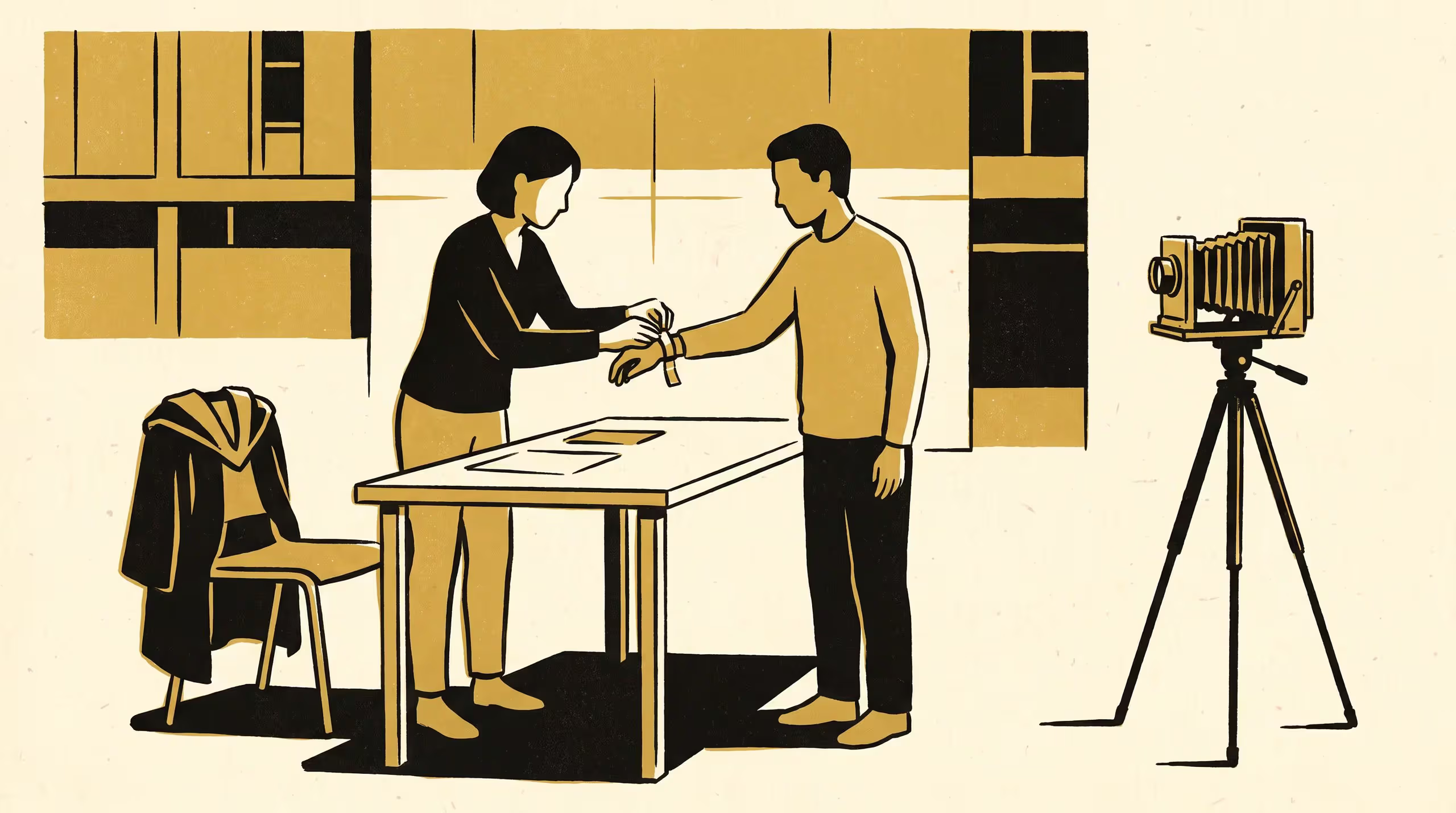
A new paper from the School of Continuous Improvement finds Commencement's photography opt-out wristband cuts a guest's odds of appearing in the official photo set by two-thirds, while confidence that the system works stays flat regardless.
Six ceremonies and 812 guests show the do-not-photograph wristband keeps guests out of the record, and leaves their trust in the system exactly where it started
Guests who collect Commencement’s do-not-photograph wristband turn up in the ceremony’s official photo set at roughly a third the rate of everyone else. A new paper from the School of Continuous Improvement went looking for whether that made anyone trust the system more, and found it didn’t.
A label can do its job and still not get any credit for it. We’d like to understand why before we hang another one on something more important than a wristband.
— Associate Professor Casimir Beng, Lead of the Adaptive Metrics Lab
Associate Professor Beng, Dr Mirela Hanke, and Dr Dagny Okafor coded the University’s published photo gallery from six ceremonies against the check-in log, then surveyed a stratified sample of guests on how confident they were that their photography preference had been honoured. Of 812 attending guests, 398 collected a wristband; wristband-wearers surfaced in the record at 11 per cent, against 34 per cent for everyone else, a gap the paper traces almost entirely to the wristband itself rather than where a guest sat or which ceremony they attended.
“We’ve learned to stop assuming a system that changes behaviour will automatically earn belief in return,” said Dr Dagny Okafor, who convenes the School’s Evaluation of Evaluation program. “The two turned out to need separate proof.”
A further subsample of wristband-wearers were told, before completing the confidence survey, that they had already been checked and found absent from every published photo. Their confidence scores landed no higher than anyone else’s.
The School is adding the finding to its running account of labels that move one thing and not the other, alongside the marker-caddy result the new paper set out to test again, where a name on a placard moved confidence and left the caddy untouched.
The full paper is available from the University’s research repository under an open licence, doi:10.5555/slop.m1vrow.