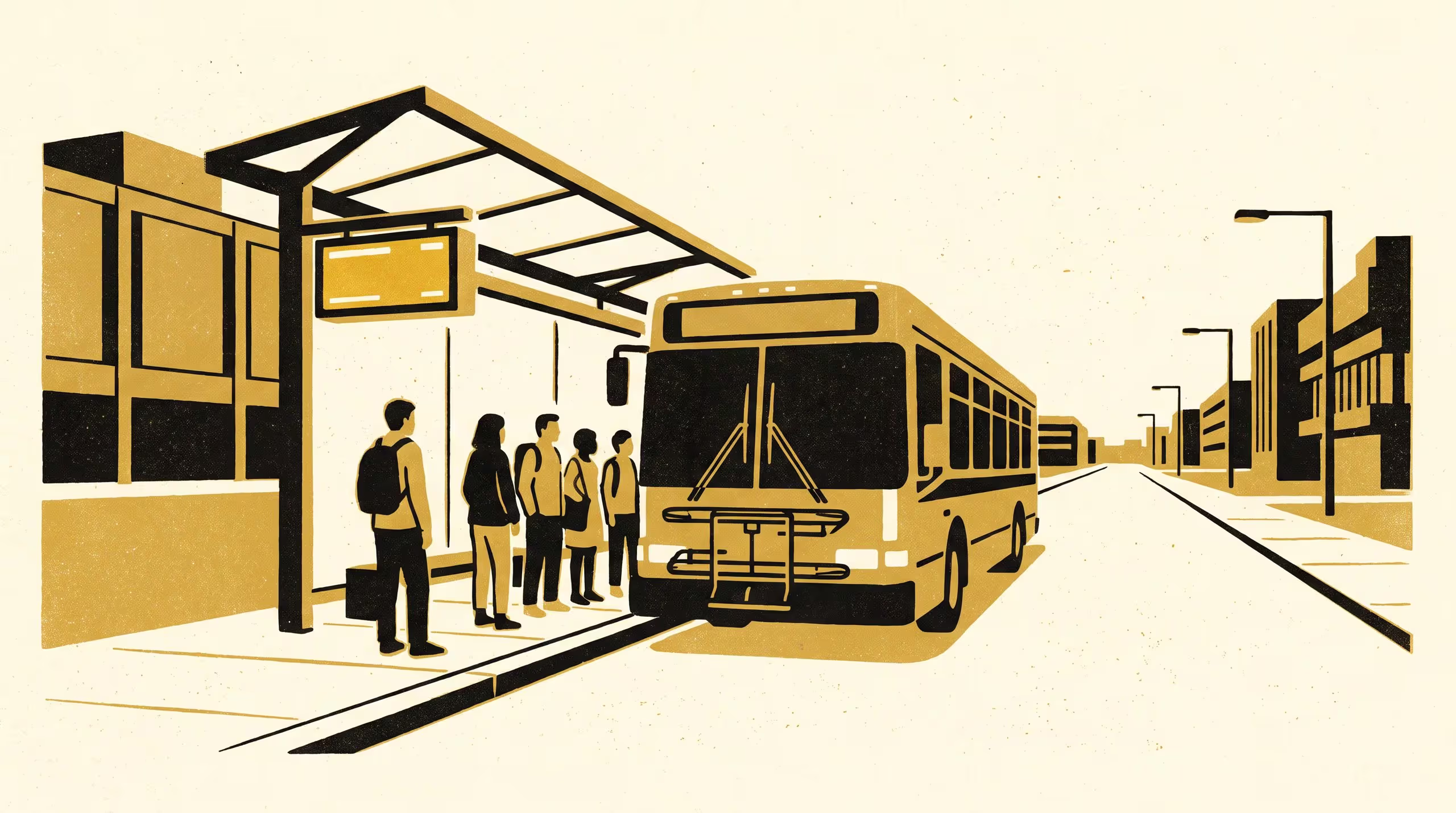
A new research poster from the School of Emergent Priorities audits eight weeks of intercampus shuttle dispatch logs, finding drivers overrode the arrival-forecasting model's skip call on more than one in three reviewed stops, most often for a queue the model had already logged as empty.
Eight weeks of dispatch logs and driver interviews trace most overrides to a queue the forecast had already logged as empty
The intercampus shuttle’s arrival-forecasting model has one blunt power: when its sensors log a stop as empty, it tells the driver to keep driving. A new research poster from the School of Emergent Priorities finds drivers are increasingly declining the instruction.
A model can be right about a sensor reading and still be wrong about a stop. We wanted to know how often a driver’s own glance out the windscreen was catching the difference.
— Dr Fenna Okoro, Senior Lecturer and Convenor, Horizon Register, School of Emergent Priorities
Dr Okoro and Dr Ingrid Vasseur reviewed eight weeks of dispatch logs across both shuttle loops, checking every scheduled skip call against what actually happened at the kerb, and followed up with structured post-shift interviews across the driver roster to establish what each override was actually responding to. Drivers overrode the model on 78 of 210 reviewed stops, most often citing a queue the model’s own sensors had already logged as empty.
“The reasons didn’t scatter the way we expected,” said Dr Vasseur. “They sorted themselves by the timetable, not by who was driving.”
The Horizon Register is filing the result alongside its wider watch on where a forecast’s confidence and what’s actually waiting at the kerb part ways.
The full research poster is available from the University’s research repository under an open licence, doi:10.5555/slop.in4uxg.