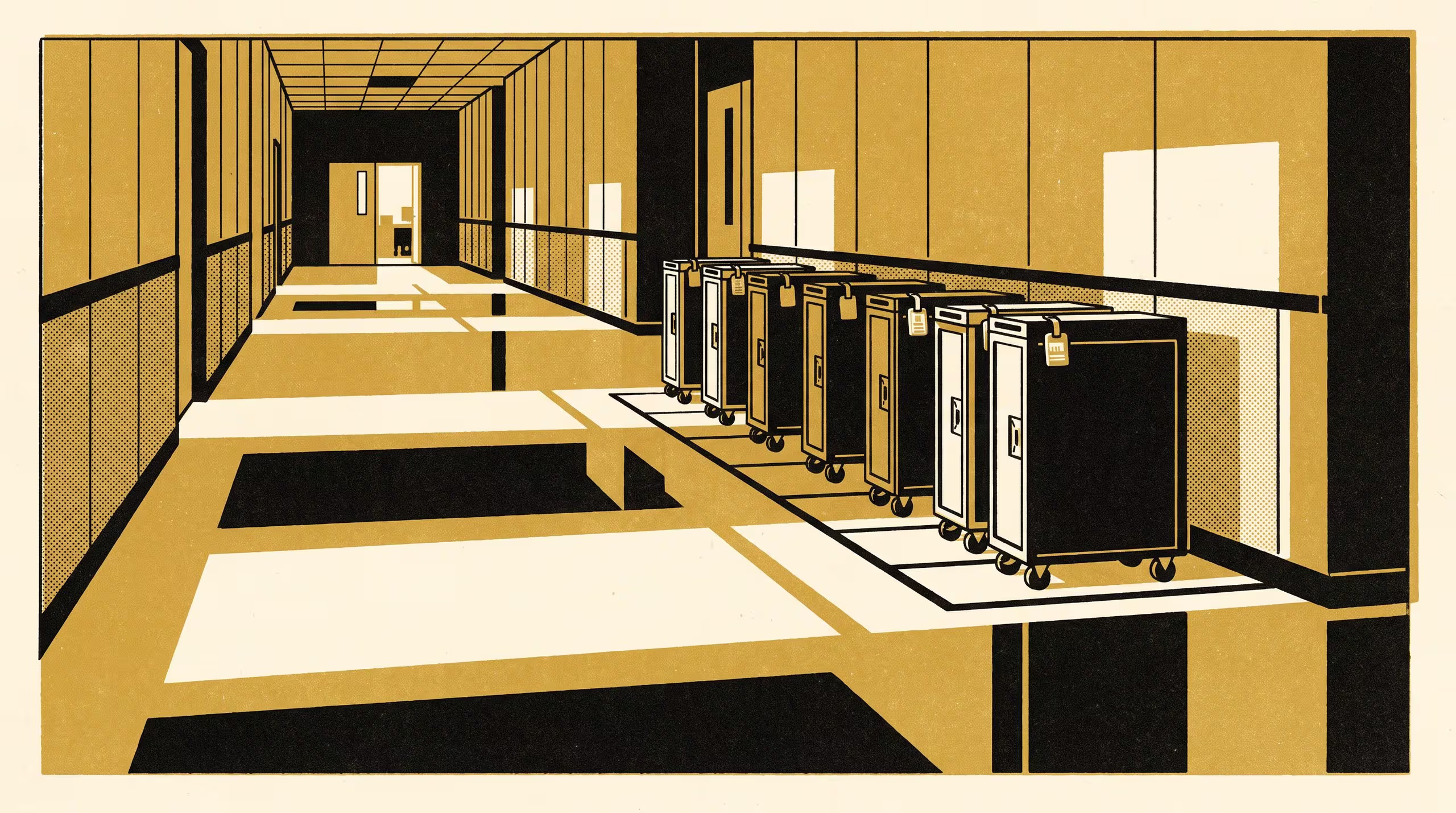
A new research poster from the School of Emergent Priorities finds a trolley-location forecast grew sharply more accurate once staff could see the tracker, and traces the gain to trolleys that simply stopped moving.
A proximity-tag forecast for shared AV trolleys sharpened the moment staff could see it, by staying exactly where they were
Facilities’ equipment fleet has always carried a blind spot: nobody can say, on any given Thursday, which of the shared AV trolleys will actually be where its booking says it should be. A pilot from the School of Emergent Priorities set out to close that gap with a proximity tag on every trolley and a model trained to anticipate the week’s stragglers before the stocktake caught them. The University counts the pilot’s early numbers among the clearer wins of its anticipatory-capability programme this term.
A forecast is only as honest as the thing it’s forecasting. Ours got much more honest-looking the day everyone could watch it.
— Professor Verity Marris, Director, Trajectory Analytics Group
Associate Professor Kwame Lindqvist welcomed the result as a prompt for the pilot’s next phase, saying the team was “glad to have this in hand before the tracker went anywhere near a budget line.”
Researchers tagged twenty-two trolleys across three buildings for a full teaching term, logging their positions against assigned bays before and after the tracker’s live map was opened to Facilities staff, and scoring the forecast’s accuracy against the physical Thursday stocktake each week.
The full poster is available from the University’s research repository under an open licence, doi:10.5555/slop.mf9gpt.