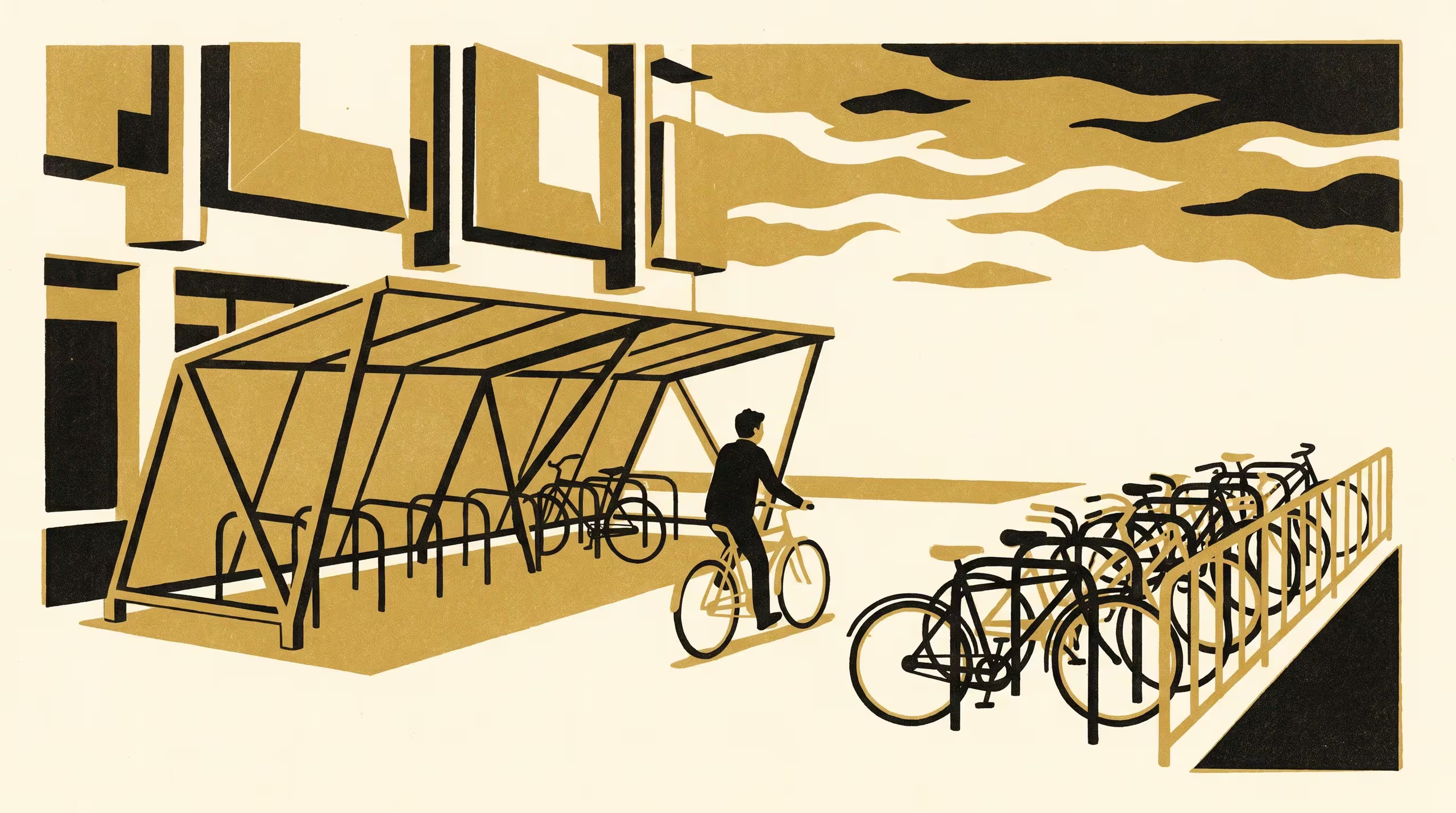
A new paper from the School of Emergent Priorities finds a covered bike-rack bank sited by the Horizon Register's demand forecast sits mostly empty, while cyclists cite proximity to where they are actually headed, not the forecast, for where they park.
Interviews at both bike-rack banks trace occupancy to proximity, not to the Horizon Register's precinct forecast
When the School of Emergent Priorities’ Horizon Register flagged rising bike-commute sign-ups in the West Wing precinct, Facilities read the trend as a cue: install covered parking before the demand arrives. A new paper checks whether it did.
The Register’s job was to protect a bank of parking against a rising count. Where cyclists actually park turns out to say more about the building they’re headed to than about the count that put the parking there.
— Dr Fenna Okoro, Senior Lecturer and Convenor, Horizon Register
Fenna Okoro and Anneke Tolan tracked occupancy at the new, forecast-sited West Wing bank and an older, unforecast bank outside the Library across a full teaching term, and interviewed 42 cyclists parking at either about why they had chosen that spot. The forecast-sited bank held a fraction of its capacity throughout; the older bank ran over capacity most weeks. Coded against the interviews, a simple measure the Register’s model never consults — walking distance to a cyclist’s actual destination — tracked occupancy far more closely than the precinct forecast that sited the bank in the first place.
“Cyclists were never confused about why they park where they do,” said Dr Tolan. “The interesting question was always why the instrument built to anticipate them didn’t ask.”
The University reads the gap as exactly the kind of finding its own anticipatory instruments exist to surface, and says the Register’s siting method will be reviewed alongside the paper’s recommendations.
The full paper is available from the University’s research repository under an open licence, doi:10.5555/slop.2e6ud1.