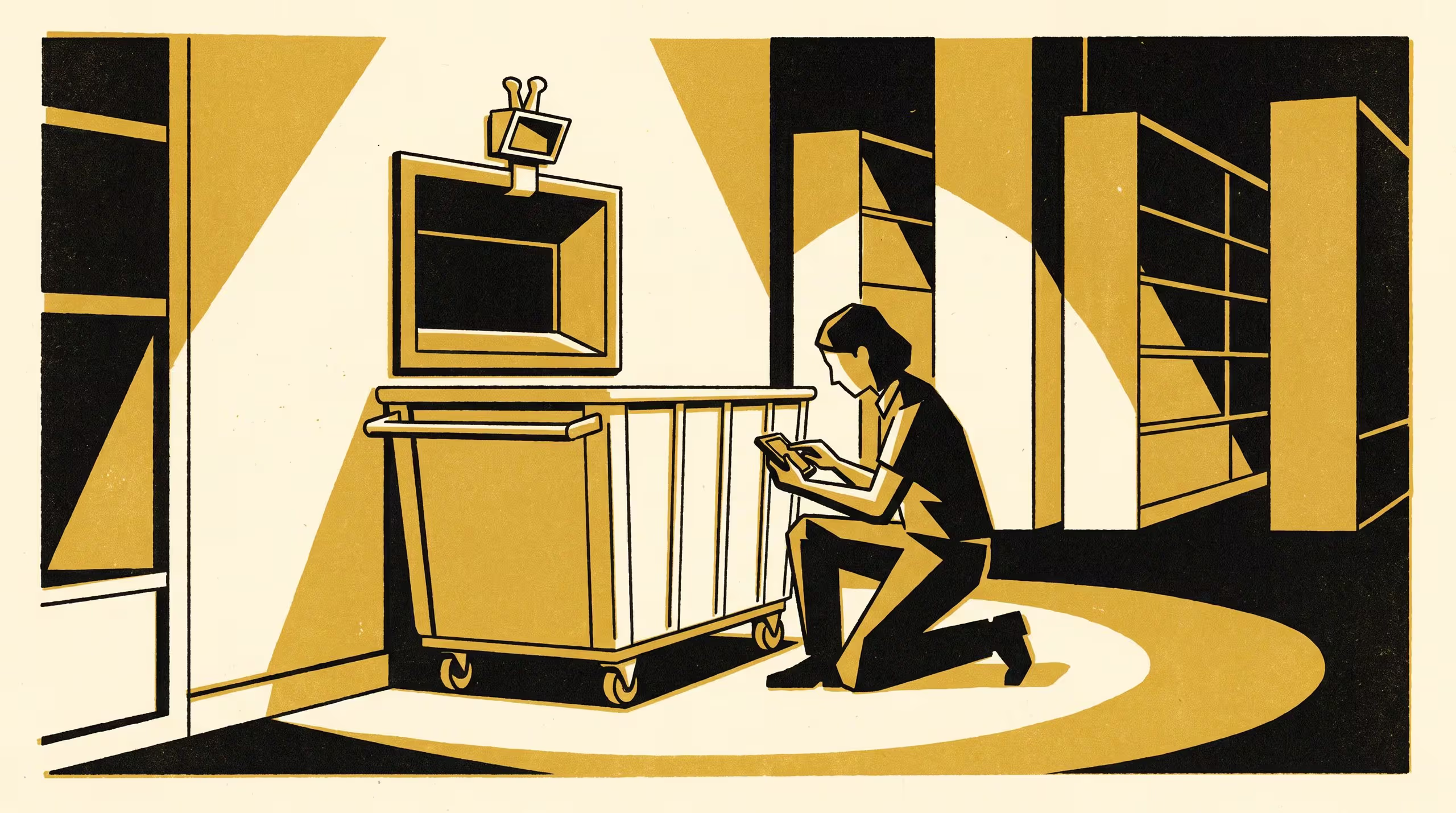
A new paper from the School of Continuous Improvement deploys a jam-and-fill sensor on the University Library's after-hours book-return chute, then traces how its alert log was cited by Facilities' staffing review as evidence of the patron demand it was never built to measure.
A fourteen-week library deployment cut night staff's walk-through rounds by three-quarters, and traced how the sensor's own alert log became Facilities' evidence for keeping the after-hours desk staffed
A sensor the School of Continuous Improvement built to catch a jammed or overfull book return has, in one term, picked up a second job nobody assigned it: evidence in Facilities’ case for keeping the University Library’s after-hours desk staffed.
Sten Okwuosa, Thandiwe Solberg, and Joost Nwosu fitted the chute with the Return-Chute Sentinel, a load cell and an infrared break-beam, and ran it for fourteen weeks against the hourly walk-through it replaced. Detection time fell from an hour-bound wait to a couple of minutes, and night staff’s rounds per shift dropped by three-quarters. Dropping the break-beam channel and inferring jams from the load cell alone changed weekly detection recall by about a percentage point, reported without dressing it up as a discovery.
An alert log timestamps a chute event. It was never going to timestamp who wanted the desk staffed, and Facilities read it as if it had.
— Dr Sten Okwuosa, Senior Research Fellow and Convenor, Impact Pathway Atlas
The paper reports, rather than argues, what came next: partway through the term, Facilities’ staffing review cited a spike in the Sentinel’s weekly alert count as evidence of sustained patron activity, using it to justify keeping the desk staffed through midnight. The instrument counts chute events; it cannot tell one student clearing forty books from forty clearing one each, and neither case says whether a person was wanted behind the desk.
“We built a sensor to watch a bin,” said Dr Thandiwe Solberg, a co-author. “Watching it get read as evidence for something else was the part we didn’t design for.”
The School places the paper alongside its record of following an instrument past the purpose it was built for.
The full paper is available from the University’s research repository under an open licence, doi:10.5555/slop.nrugpq.