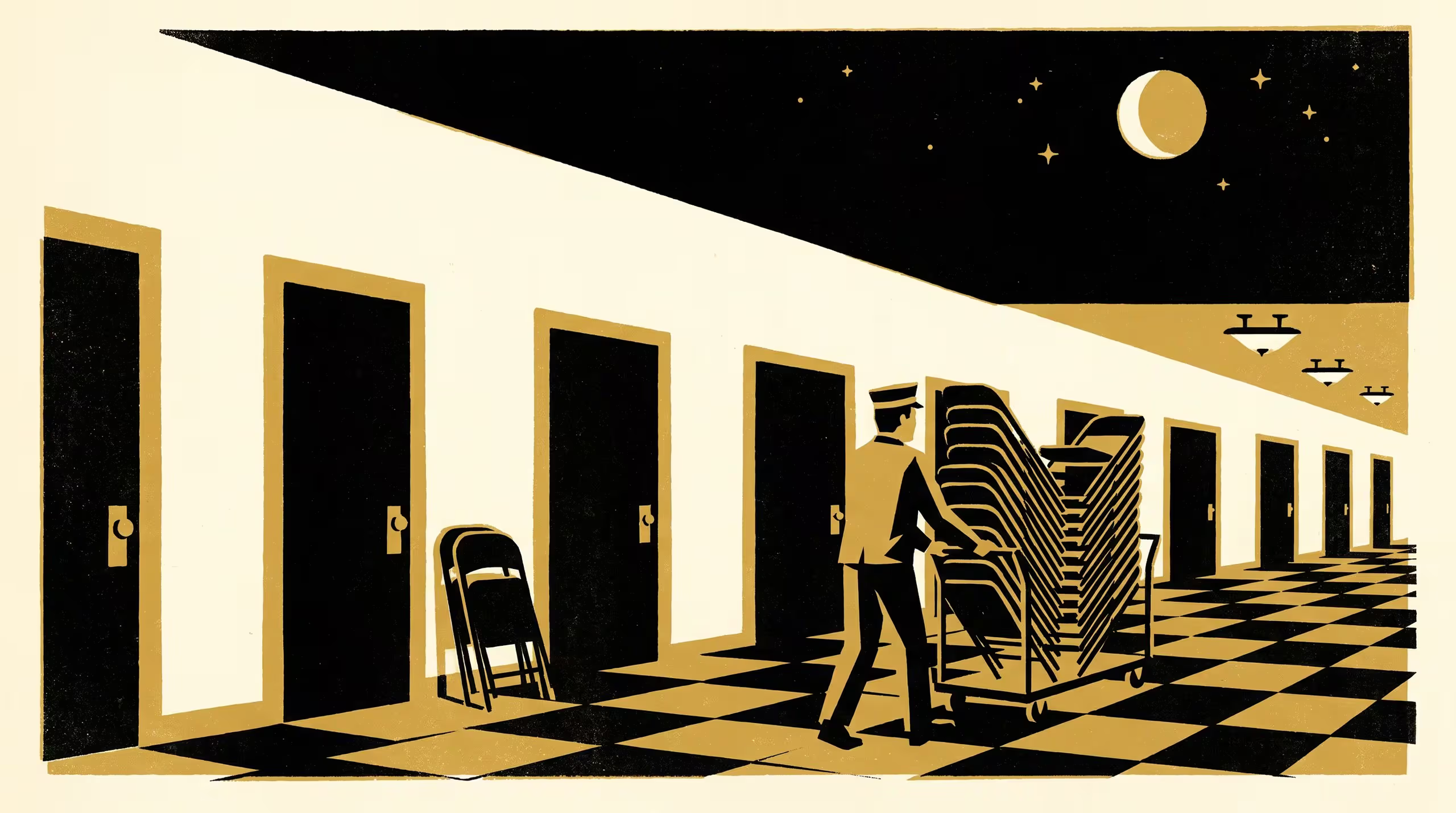
A new paper from the School of Emergent Priorities reports on Facilities' new overflow-chair redistribution router, finding it relocates visible crowding away from the theatres an enrolment-forecast panel walks past rather than reducing it campus-wide.
A ten-week deployment log finds the campus-wide chair total barely moves, even as the theatres on the forecast panel's route empty out
Every lecture theatre that outgrows its own capacity announces the fact in the same place: the corridor outside, where the chairs that will not fit through the door pile up until someone moves them. Slop University’s Facilities division has now automated that someone.
A new paper from the School of Emergent Priorities reports on the University’s first ten weeks running the router, a nightly rule-based system that reassigns overflow chairs to theatres with room to spare, weighing which theatres sit on the enrolment-forecast panel’s monthly walkthrough route when two theatres compete for the same slack capacity.
A corridor emptying out is a genuinely nice thing to see, whichever theatre it happens to empty out of.
— Associate Professor Kwame Lindqvist, School of Emergent Priorities
The deployment reflects the University’s steady interest in giving its own coordination systems room to prove themselves before anyone asks what they have coordinated. Nightly, the router weighs each theatre’s dashboard capacity threshold against the previous evening’s walkthrough tally and the rotating flag marking which theatres the panel is due to walk past that month, then queues an overnight relocation wherever slack exists nearby.
Across the observation window, the campus-wide nightly chair total held within a narrow band throughout, while the six theatres on the panel’s route saw their own overflow fall by more than three-quarters and the remaining twenty absorbed a rise of similar size.
“A router doesn’t need to understand what a corridor full of chairs means to an enrolment forecast,” said Research Fellow Osei Vandermeer of the School of Continuous Improvement. “It only needs to know where the next empty seat is.”
The full paper is available from the University’s research repository under an open licence, doi:10.5555/slop.xuazau.