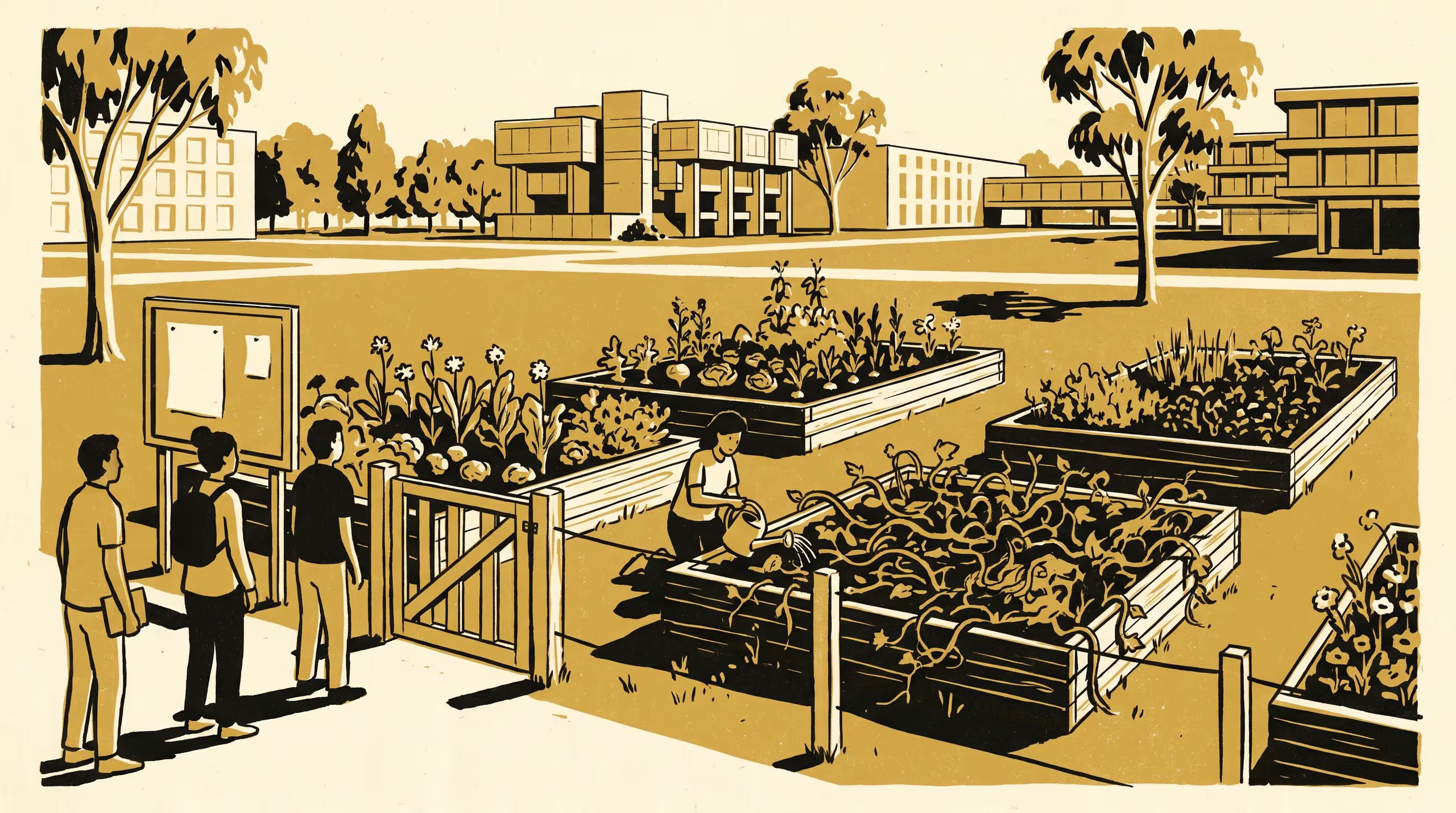
A School of Emergent Priorities interview study of 22 households who moved off Slop University's community-garden waitlist finds asking the rostered convenor directly outweighs the published Stewardship Priority Score in both explaining who advances and predicting how long they waited.
A new interview study finds the community-garden Stewardship Priority Score changes almost nothing about who actually gets offered a plot next, or when
Slop University’s community garden has never lacked demand; what it has lacked, until now, is anyone checking whether the priority score built to ration its plots is the thing actually doing the rationing. A new paper from the School of Emergent Priorities puts that question to the people best placed to answer it: the households who have already crossed the waitlist and received a plot.
Dr Ingrid Vasseur and Dr Lindiwe Achterberg interviewed 22 of the 24 households offered a plot over the past two years, asking each, in their own words, how they believed their turn came. Matched against each household’s position on the published Stewardship Priority Score at the time, the answers cluster around one channel far more than any other: asking the rostered convenor directly, in almost identical proportions whether a household sat above or below the list’s median score. A comparison of how long each group actually waited tells the same story, with wait times the Score exists, on paper, to keep apart landing squarely on top of each other.
A score can be published, updated on schedule, and still not be the thing doing the ordering. Ours is exactly that, as far as we can tell.
— Dr Ingrid Vasseur, Lecturer and Convenor, Futures in Committee
Dr Lindiwe Achterberg, Lecturer in the School of Emergent Priorities, called the waitlist “an arrangement that clears in practice while staying formally undecided in principle.”
The School counts the study among its more candid checks on the machinery it also keeps running, and notes that the fortnightly sign-off the finding turns on remains, for now, unchanged.
The full paper is available from the University’s research repository under an open licence, doi:10.5555/slop.qe42zi.