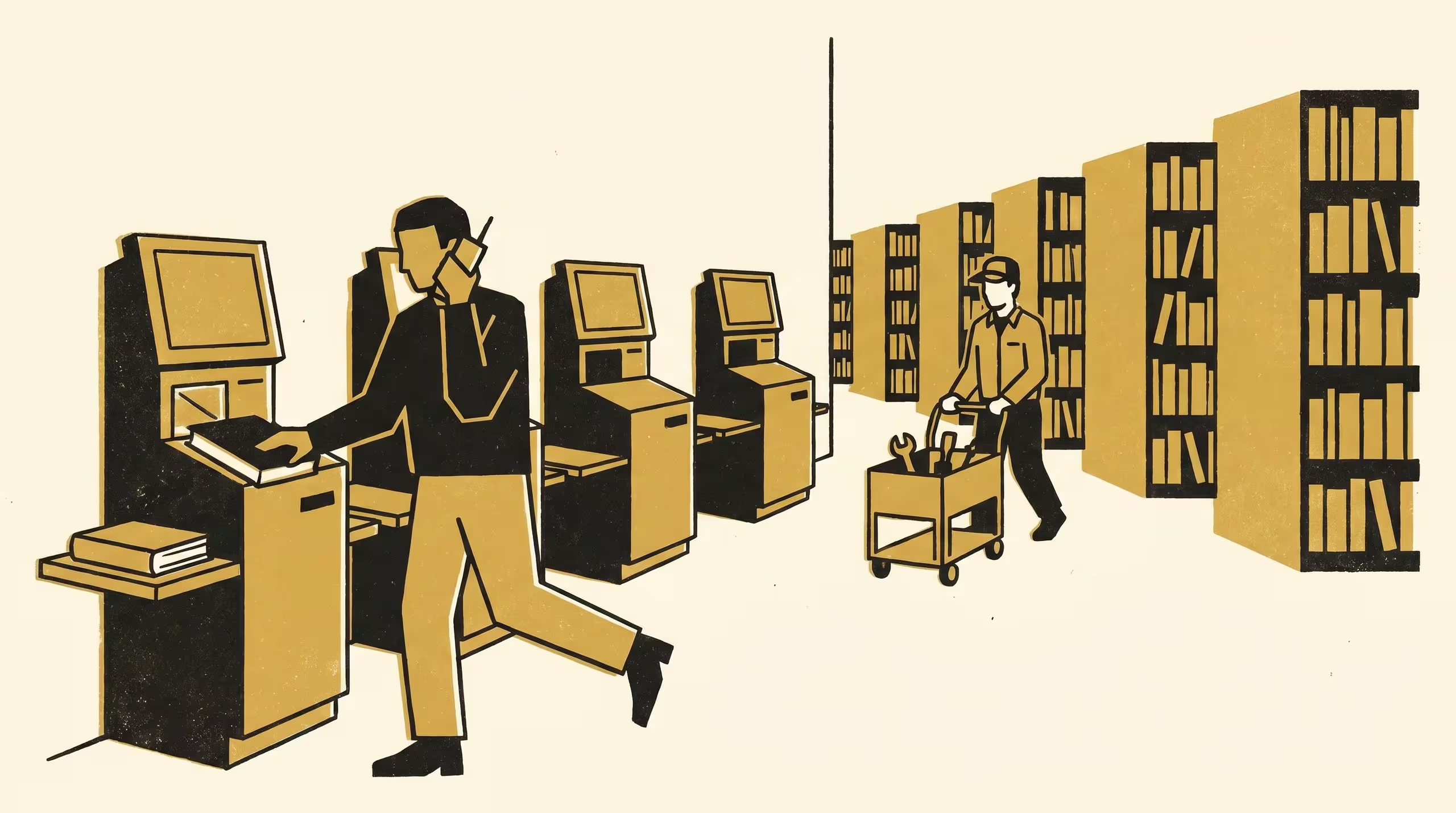
A new paper from the School of Emergent Priorities and the School of Continuous Improvement interviews library patrons who abandon a self-checkout session, and checks their reasons against the maintenance ticket the abandonment always triggers.
An intercept-interview study of 214 library patrons finds just 9% of self-checkout walk-aways involve an actual kiosk fault
Walk away from a Slop University library self-checkout kiosk mid-scan, and the system logs exactly one explanation: a fault. A new paper from the School of Emergent Priorities and the School of Continuous Improvement went and asked the walking-away patrons what actually happened.
Dr Anneke Tolan and Associate Professor Casimir Beng intercepted 214 patrons across the University’s eleven self-checkout kiosks over six teaching weeks, approaching each within thirty seconds of an unfinished session to ask, before consulting any log, what had just occurred. Nine per cent described anything resembling a kiosk fault. The rest cited an interruption, an overdue-item block, a change of mind, or a question for library staff the kiosk’s help screen couldn’t answer. Of the 171 sessions that went on to trigger the automatic ticket, technicians closed 91% of the non-fault cases the same way they closed the confirmed faults: by resetting a kiosk that had never stopped working.
Nobody path-tests an assumption by standing next to the kiosk and asking. We did, and it turns out most walk-aways are just people living their lives near a barcode scanner.
— Dr Anneke Tolan, Senior Research Fellow, School of Emergent Priorities
Associate Professor Beng, whose Adaptive Metrics Lab studies measurement systems and what happens once nobody checks them, said the technicians had already worked out the ticket’s blind spot on their own, long before anyone interviewed a patron about it. “They reset the machine anyway,” he said. “Resetting it is faster than arguing with a ticket that only ever has one category available to it.”
Library IT has not proposed a second category for the ticketing integration. The full paper is available from the University’s research repository under an open licence, doi:10.5555/slop.kwf82j.