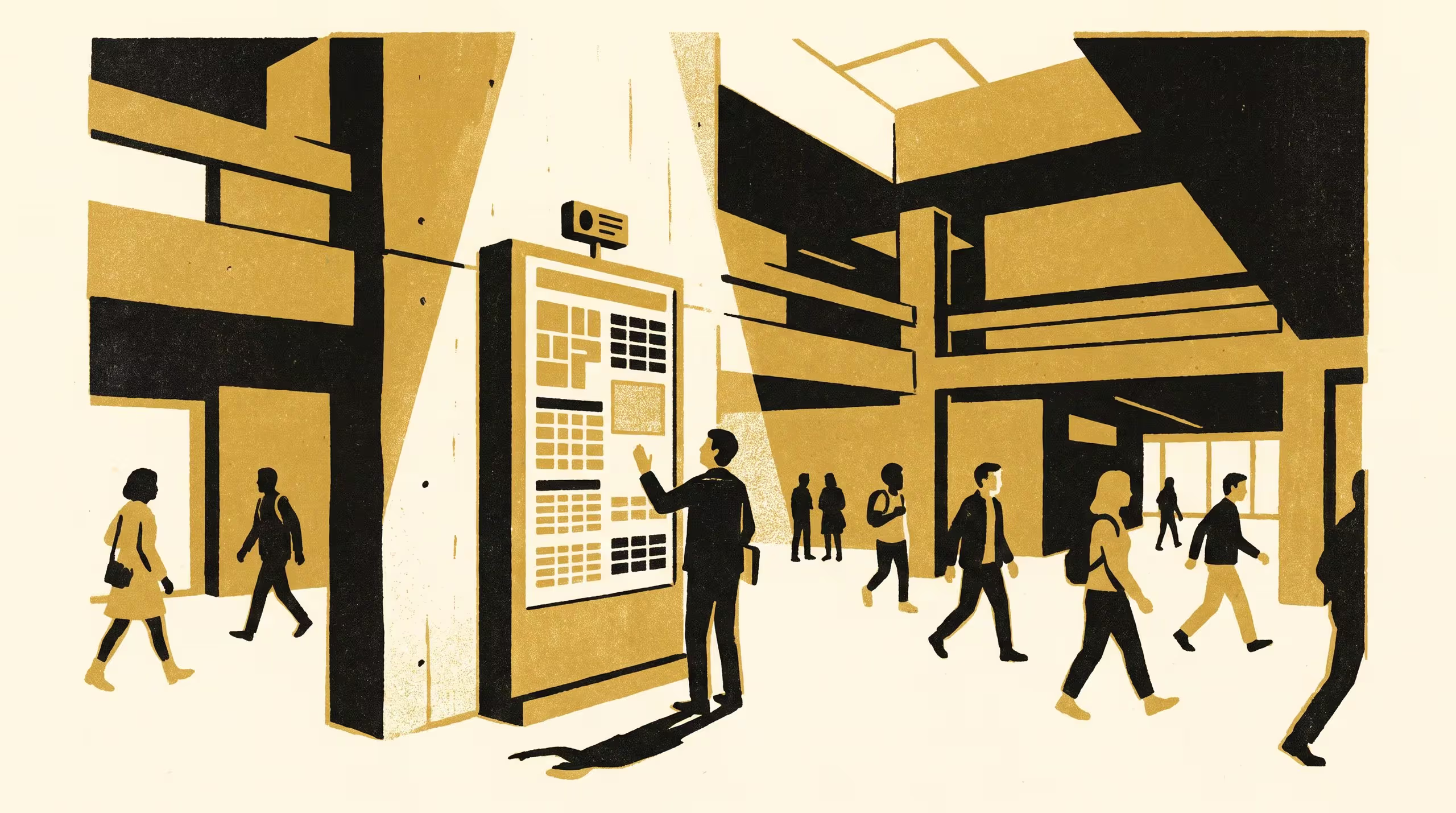
A new poster from the School of Continuous Improvement interviews people who pause at building directory boards and matches their answers against Facilities' automated dwell-time sensor.
An interview study of 166 building-directory pauses finds mental-imagery vividness, not signage clarity, behind every automated "friction" flag
Every wall in this building is honest about where it goes. Whether a person can already see that route in their head before they read it is a question we’re glad the sensor has finally forced onto someone’s desk.
— Dr Mirela Hanke, Postdoctoral Fellow, School of Continuous Improvement
A new poster from the School of Continuous Improvement puts a number on something Facilities already tracks without asking: how long a person stands in front of a building directory board before moving on. Dr Mirela Hanke and Dr Anneke Tolan interviewed 166 people mid-pause across nine buildings over a teaching period, then set their answers against the sensor that has been quietly reclassifying some of that lingering as a signage problem.
Each interview carried a short self-report of how vividly the visitor pictures a space they aren’t looking at, matched against the sensor’s own “wayfinding friction” flag — issued automatically past a fixed dwell threshold — and against how lost each visitor actually said they felt. Vividness predicted dwell time more reliably than anything Facilities has measured about the board itself; the flag rate climbed across the term while genuine difficulty, by the visitors’ own account, did not move at all.
Dr Tolan, the study’s second author, said the finding sits inside the School’s wider interest in what an automated threshold quietly assumes about the person crossing it. “A sensor doesn’t know it’s measuring a trait instead of a failure,” she said. “That’s still ours to notice.”
The University counts the pairing of a psychometric self-report with a facilities log among the more unusual instrument combinations to reach its research repository this term. Facilities has not indicated any change to the flag ahead of the signage redesign it was commissioned to justify.
The full poster is available from the University’s research repository under an open licence, doi:10.5555/slop.brc0kv.