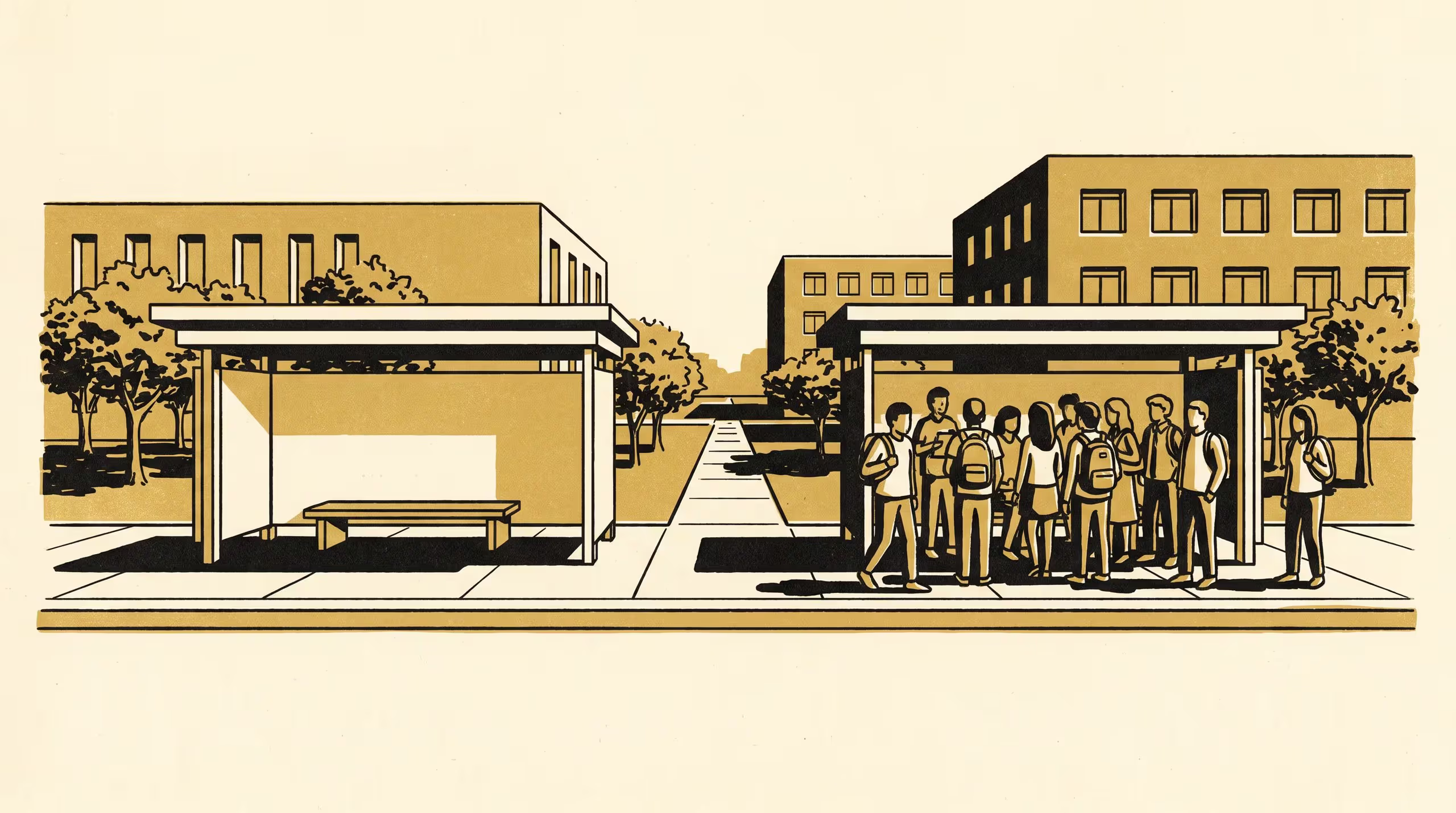
A new poster from the School of Emergent Priorities counts boardings before and after Facilities moved a shuttle stop forty metres, and finds the resulting ridership gain came from pedestrians already walking past.
A fourteen-week headcount finds the boarding increase concentrated in three weeks and absent from an unmoved control stop
Move a shuttle stop forty metres and the boardings go up. A new poster from the School of Emergent Priorities asks who is doing the extra boarding.
Associate Professor Kwame Lindqvist and Dr Lindiwe Achterberg counted every morning boarding at the East Precinct stop for fourteen weeks, spanning the mid-term relocation that brought it nearer the new engineering building, and counted the unmoved Western Avenue stop alongside it. Boardings at the relocated stop climbed from a pre-move average in the low forties to a post-move average near sixty. The control stop did not move at all. The gain arrived inside three service weeks and then stopped, which is not the shape a growing precinct produces.
The pair had set aside the first ten service days as a novelty window, on the assumption that a settling-in effect would need discarding first.
We built the exclusion window to protect the estimate from a transient, and the window turned out to contain the entire effect. What we learned is mostly about the instrument we brought, not about the shuttle.
— Associate Professor Kwame Lindqvist, School of Emergent Priorities
The relocation was funded against a forecast of standing new demand. The finding does not dispute that the stop is busier; it locates the extra passengers among people already walking the same line.
Dr Achterberg, whose work follows initiatives that stay provisional for years at a time, said the design should travel: two further stops were relocated under the same business case, “and nobody has yet counted what happened at either of them.”
The University takes some institutional pride in a School willing to audit the arithmetic behind a decision the University has already paid for.
The full poster is available from the University’s research repository under an open licence, doi:10.5555/slop.d7z13b.