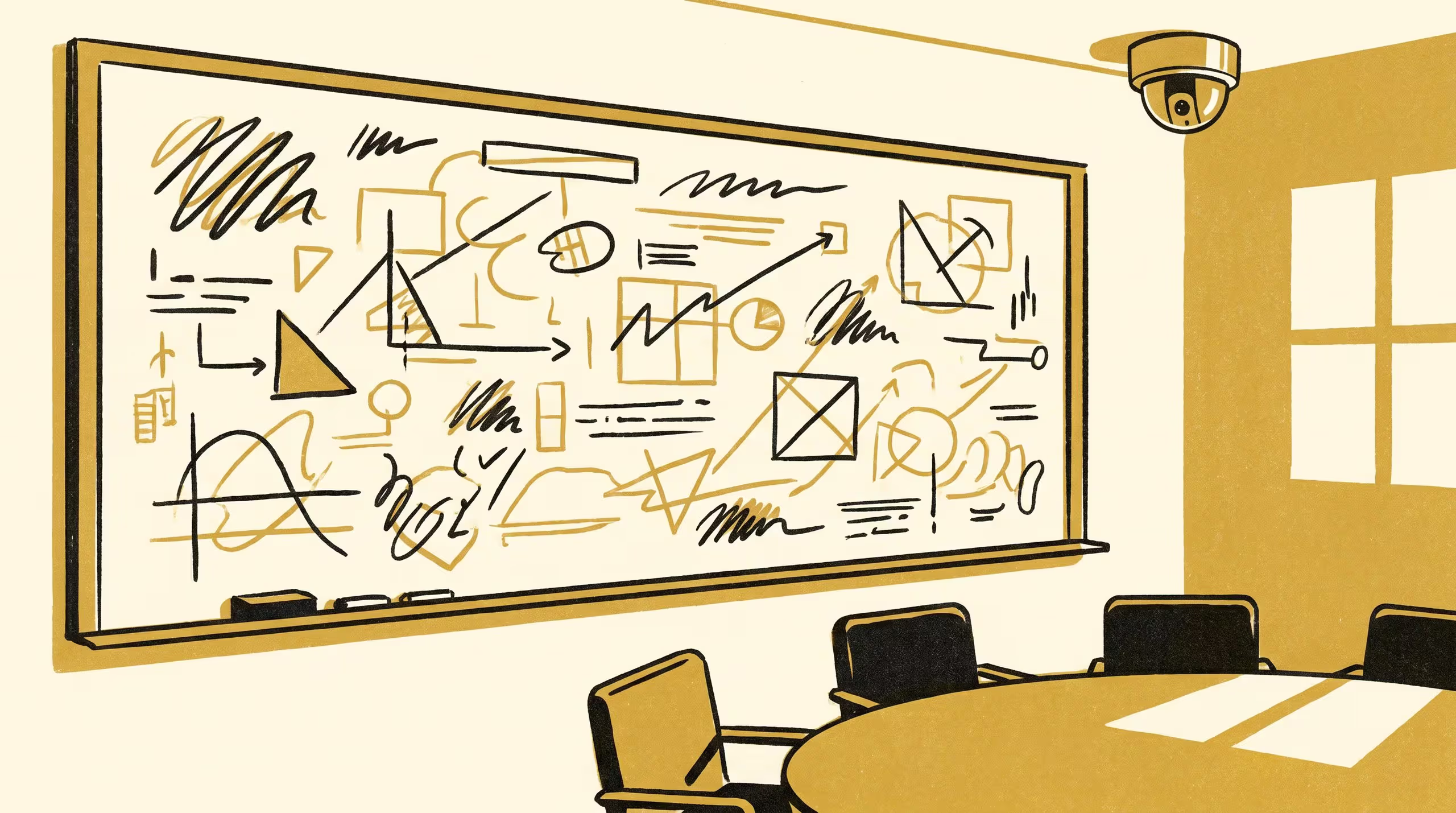
A new paper from the School of Emergent Priorities and the School of Continuous Improvement surveys staff on why they mark up meeting-room whiteboards, and matches the answers against Facilities' own photo-audit log and an independently coded record of meeting outcomes.
A staff survey finds deliberate whiteboard marking predicts a room's engagement score but not whether the meeting decided anything
Staff work out very quickly what a camera is for. Ours apparently worked out what our camera was for faster than we did.
— Dr Lindiwe Achterberg, Lecturer, School of Emergent Priorities
That is roughly what a new paper from the School of Emergent Priorities and the School of Continuous Improvement found when it asked 138 staff why they mark up a meeting-room whiteboard. Since Facilities introduced its Room Engagement Score — a single end-of-slot photograph of the board, scored “engaged” if there’s ink on it and “engagement not evidenced” if there isn’t, feeding straight into the following term’s room-booking priority — staff in high-demand rooms have learned exactly what the lens is looking for. Sixty-one per cent now report marking the board “usually” or “always,” against nineteen per cent in rooms nobody is fighting to keep.
Dr Achterberg and Dr Mirela Hanke, the paper’s second author, matched the survey against the Score’s own audit log and an independently coded record of whether each meeting actually reached a decision. Deliberate marking predicted a strong “engaged” score; it barely predicted anything else. “The ink and the outcome,” said Dr Hanke, “turned out to be two different questions, and the room-booking system has only ever been asking one of them.”
Facilities has not indicated any change to the Score ahead of next term’s allocation review.
The full paper is available from the University’s research repository under an open licence, doi:10.5555/slop.yjud2l.