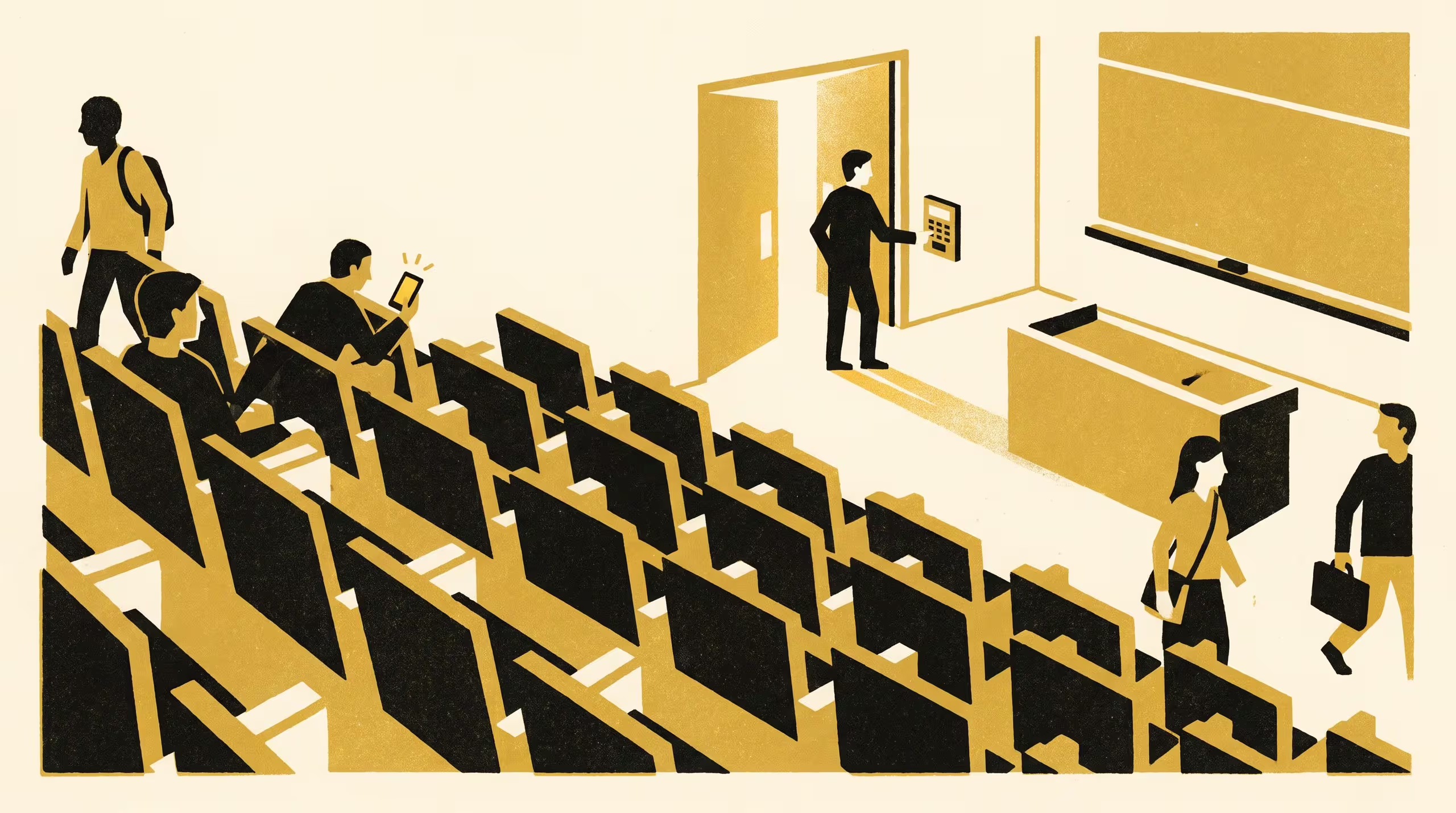
A new paper from the School of Emergent Priorities finds a mandatory wifi captive-portal notice does little to cut dropped lecture-hall connections, and instead reliably pushes students onto their phones' mobile data.
A staggered upgrade across fourteen lecture theatres traces where an eight-second captive-portal notice sends the connections it doesn't save
Fourteen lecture theatres had their wifi captive portal quietly rebuilt this term, one AV refresh at a time, each new version adding an eight-second digital-literacy notice before the login screen would accept a tap. Nobody scheduling the refresh asked what happened to a connection that dropped anyway. A new paper from the School of Emergent Priorities does.
Professor Verity Marris, Associate Professor Casimir Beng, and Dr Petra Umbile treated the staggered rollout as a natural experiment, comparing theatres that received the notice early against theatres still running the old one-tap portal, then adding a third arm — a content-free delay of the same eight seconds, with no notice at all — to separate the effect of the wait from the effect of the words filling it. Dropped-connection rates across the three arms proved statistically indistinguishable. Mobile-data handoffs did not: theatres running the notice showed a consistently larger rise in students tethering partway through class.
Eight seconds either changes a connection’s fate or it doesn’t. On this evidence the fate was already decided; the notice just decided where the disconnection happens.
— Professor Verity Marris, Director, Trajectory Analytics Group
Dr Umbile, the paper’s third author, called the tethering figure “the more interesting number to have kept,” noting that a measure built to justify one rollout had quietly spent the term tracking a different behaviour entirely.
The University has not revised the notice’s rollout schedule. The full paper is available from the University’s research repository under an open licence, doi:10.5555/slop.a2a085.