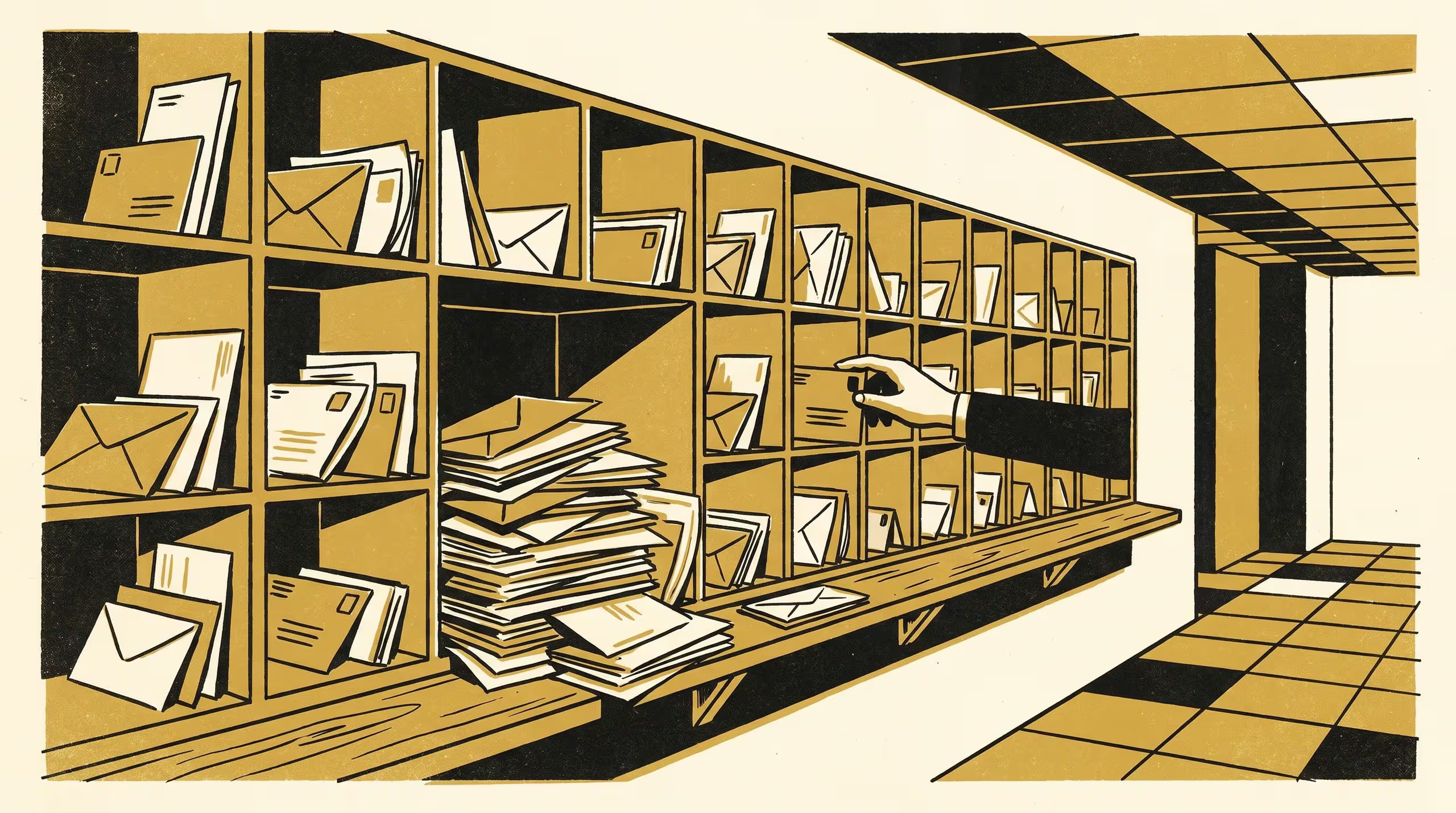
A new paper from the School of Emergent Priorities shadows Slop University's mailroom pigeonhole wall for two unannounced weeks and finds the mailroom's own binary clearance flag can't distinguish an addressee's own hand from a delegate's or the mailroom's.
An unannounced two-week audit of the pigeonhole wall finds the log's binary flag tracks two of four clearance types and barely tracks the other two
A pigeonhole marked “cleared” on Slop University’s mailroom log, and a pigeonhole its addressee has actually visited, turn out to be two different events more often than the log currently admits. A new paper from the School of Emergent Priorities reports the gap.
Dr Fenna Okoro, Associate Professor Kwame Lindqvist, and Dr Anouk Mensah set an unannounced fortnight of direct observation against the mailroom’s own binary record, comparing who was actually seen at the wall of 118 staff pigeonholes with what the daily sweep alone would have reported. Four distinct clearance habits emerged, from same-day collection to pigeonholes the mailroom itself eventually has to empty, and the log’s single flag turned out to track only two of them.
A flag that has been right for years doesn’t need to be checked again, until the day it quietly stops being right for everyone.
— Dr Fenna Okoro, Senior Lecturer and Convenor, Horizon Register
Dr Anouk Mensah, Postdoctoral Fellow and a co-author on the paper, whose own work follows how a phrase survives a program’s language long after its meaning has moved on, said the flag “hasn’t changed its name once in years; what changed is everyone’s idea of what the name means.”
The School reads the mismatch as a minor but useful entry in its own anticipatory-capability agenda: knowing in advance which of an institution’s numbers will hold up before someone leans on them. The mailroom’s sweep continues unchanged.
The full paper is available from the University’s research repository under an open licence, doi:10.5555/slop.2iwb4d.