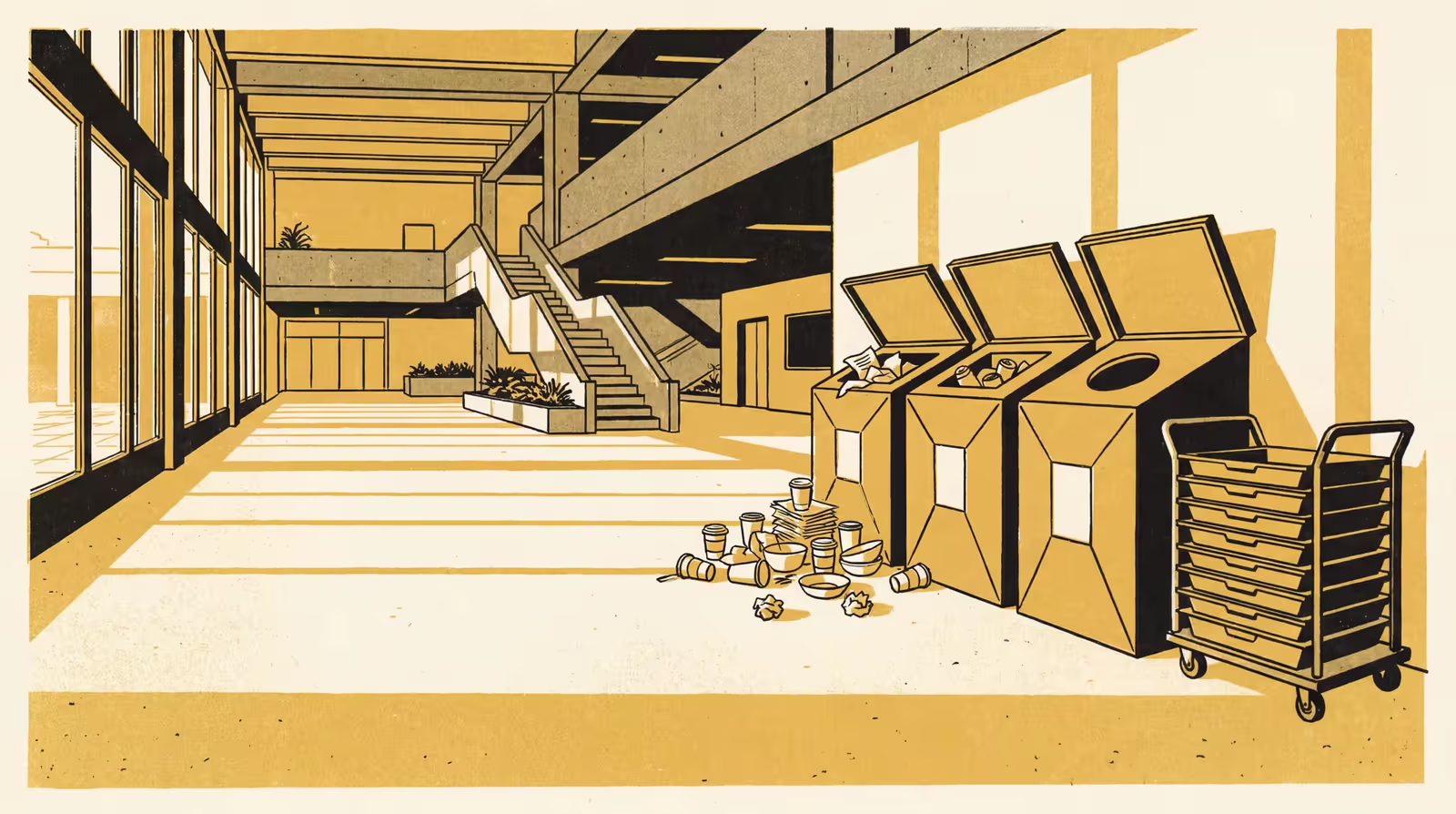
A School of Continuous Improvement poster sorts 1,842 non-conforming items out of the paper-only recycling stream across two audit waves, and finds the largest class is disposable cups and bowls supplied under the University's own catering contract.
A two-wave audit of nine buildings finds catering-supplied cups and bowls are the single largest class of material wrongly placed in the paper-only stream
Nine buildings’ paper-only recycling bins were emptied onto a sorting bench twice this trimester, and every item that did not belong there was weighed, photographed, and written down.
The resulting poster, presented this week by the Office of Research Outputs, comes from the School of Continuous Improvement. Dr Thandiwe Solberg, Dr Joost Nwosu, and Dr Bram Ntuli coded 1,842 non-conforming items to a five-class scheme fixed before the first wave went ahead, double-coding a 340-item subsample to establish that two coders looking at the same object reached the same class.
Disposable cups and bowls supplied under the University’s catering contract were the largest single class in both waves, and the distribution barely moved between them. Facilities’ Diversion Performance Score marks a building down for precisely this material.
The University counts a result that lands on its own procurement no less publishable than one that lands anywhere else.
One class in our scheme is conforming paper that an auditor had already recorded as contamination, and it accounts for about one item in eight. We built the frame, and the frame caught the people holding it. That is the part of this poster the School will be sitting with.
— Dr Thandiwe Solberg, Senior Lecturer and Convenor of Demo Quarter
“The bins are not misbehaving,” said Dr Ntuli, Convenor of Improvement Grand Rounds. “They are receiving, with some accuracy, what the campus hands them across a counter.”
The full poster is available from the University’s research repository under an open licence, doi:10.5555/slop.t54ir7.