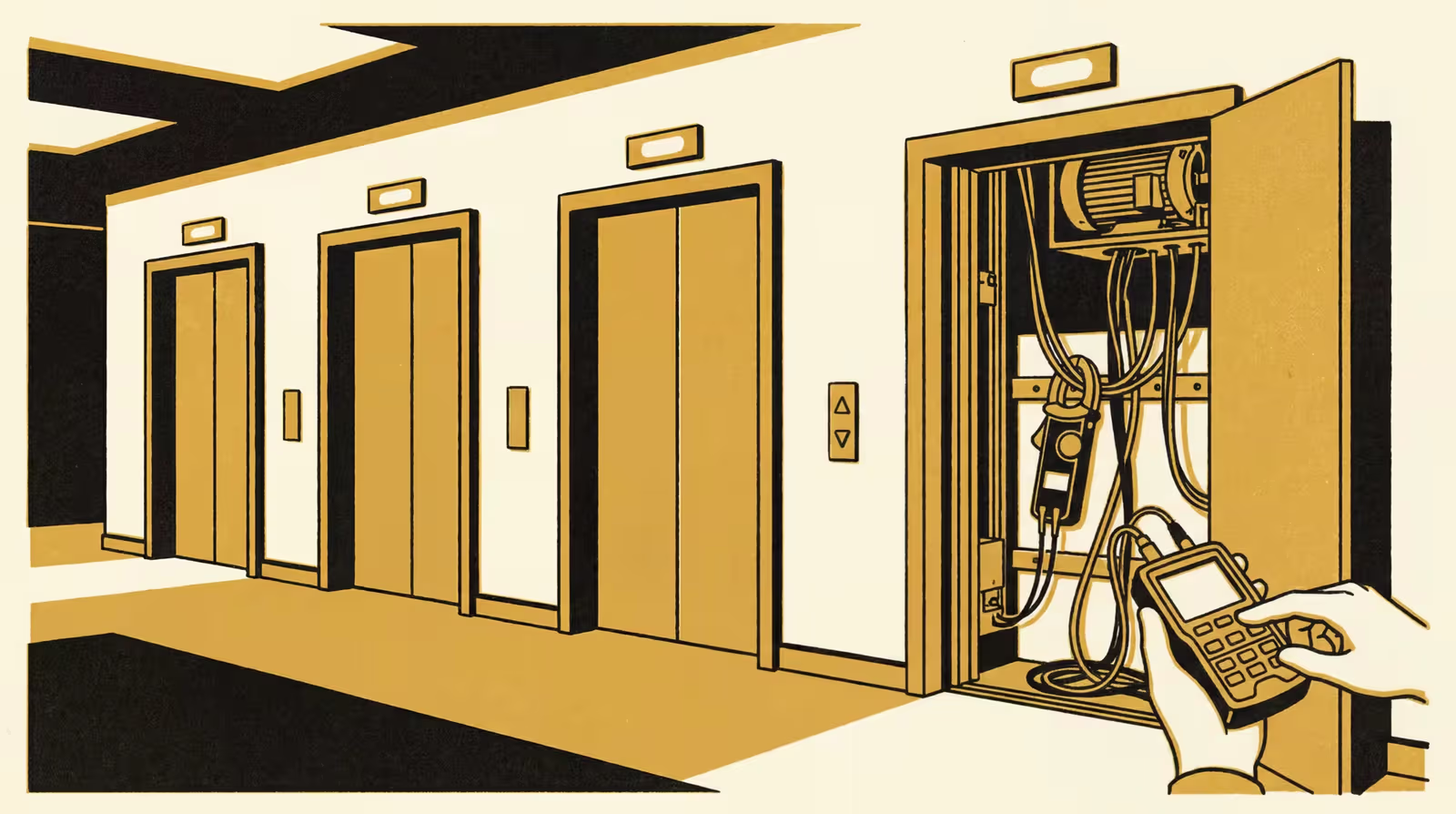
A new paper from the School of Continuous Improvement fits an independent meter to each of the tallest building's four lift cars and finds the Living Dashboard's headline electricity saving real, but earned by only half the fleet.
A car-by-car audit finds the reported 13.4% cut is real, concentrated entirely in two of the building's four lifts
Facilities’ Living Dashboard, the School of Continuous Improvement’s always-on self-measurement wall, credited a new lift-dispatch controller in the University’s tallest building with a 13.4% cut to the building’s weekly lift electricity draw. Rather than take the figure as read, the School fitted an independent meter to each of the building’s four lift cars and checked the number against the machinery that actually produced it. The audit sits inside the School’s wider habit of testing an indicator against the unit it was built to describe, rather than the unit a meter happened to already exist at.
A building tells you what it saved, never who saved it for. Averaging four lifts into one bill was never dishonest, only incomplete, and we wanted the incomplete part written down properly.
— Dr Thandiwe Solberg, Senior Lecturer and Convenor of Demo Quarter
The study logged each car’s own energy draw across a nine-week window that happened to catch the controller’s staged rollout across the building, then set the car-level totals against the aggregate the Dashboard had always reported. A short trial switching off just the lobby screen that nudges waiting passengers to share a car left the measured saving unchanged. “The two lower cars did exactly what the controller promised,” said Dr Joost Nwosu, Postdoctoral Fellow. “The other two just got quieter about not doing it.”
The finding leaves the Dashboard’s headline figure standing — the School is not proposing Facilities revise how it reads the switchboard — while adding a record of where inside the building that figure actually comes from.
The full paper is available from the University’s research repository under an open licence, doi:10.5555/slop.np9tl0.