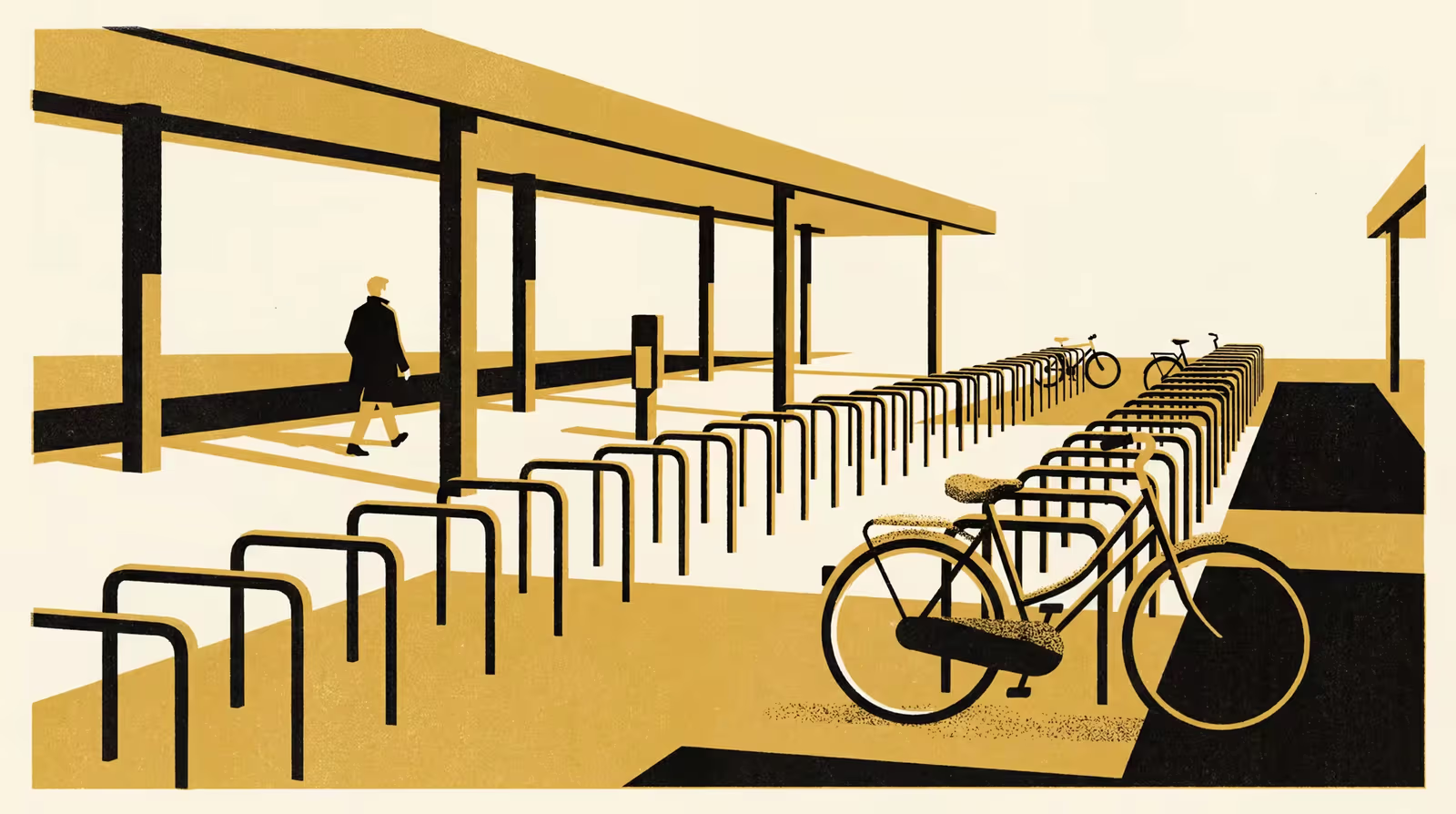
A School of Continuous Improvement poster interviews 38 bike-rack permit-holders about whether they still cycle to campus, and finds the University's cycling-participation index keeps climbing regardless of what they say.
Interviews with permit-holders find the register's steady rise tracks an uncancelled form, not who is actually still riding in
Slop University’s bike-rack permit register has risen in every quarter on record. Not one quarter, across two and a half years, has seen it fall — even as some of the people renewing that permit told researchers, when asked directly, that they had stopped riding in months or years ago.
The finding comes from a new poster by the School of Continuous Improvement, presented this week by the Office of Research Outputs. Dr Renke Sabel and Dr Osei Vandermeer interviewed 38 active permit-holders, drawn from across the University’s buildings, about their current riding habits, then set what they said against the register the sustainability office treats as its cycling-participation index.
Riding frequency reported in interview showed only a weak relationship with permit status. The register, meanwhile, tracked something else entirely: whether a renewal had lapsed on paper, not whether a bicycle had been used. Cancelling a permit currently requires a form, and nothing in the renewal cycle prompts anyone to file one.
An indicator that only ever climbs is not obviously a success, and the School would rather say so in its own newsroom than leave the finding for someone else to make.
An indicator survives by never being wrong in a way anyone has to act on. This one has never had to be wrong, because nobody ever checks what it’s still counting.
— Dr Sabel, Senior Lecturer in the School of Continuous Improvement
Dr Vandermeer, Research Fellow and Convenor of the Review Cadence Observatory, welcomed the comparison. “We talk about closing the loop between what’s sensed and what’s reported,” he said. “This is a loop that only closes in one direction: registrations flow in, nothing flows back out.”
The full poster is available from the University’s research repository under an open licence, doi:10.5555/slop.qjaeiq.