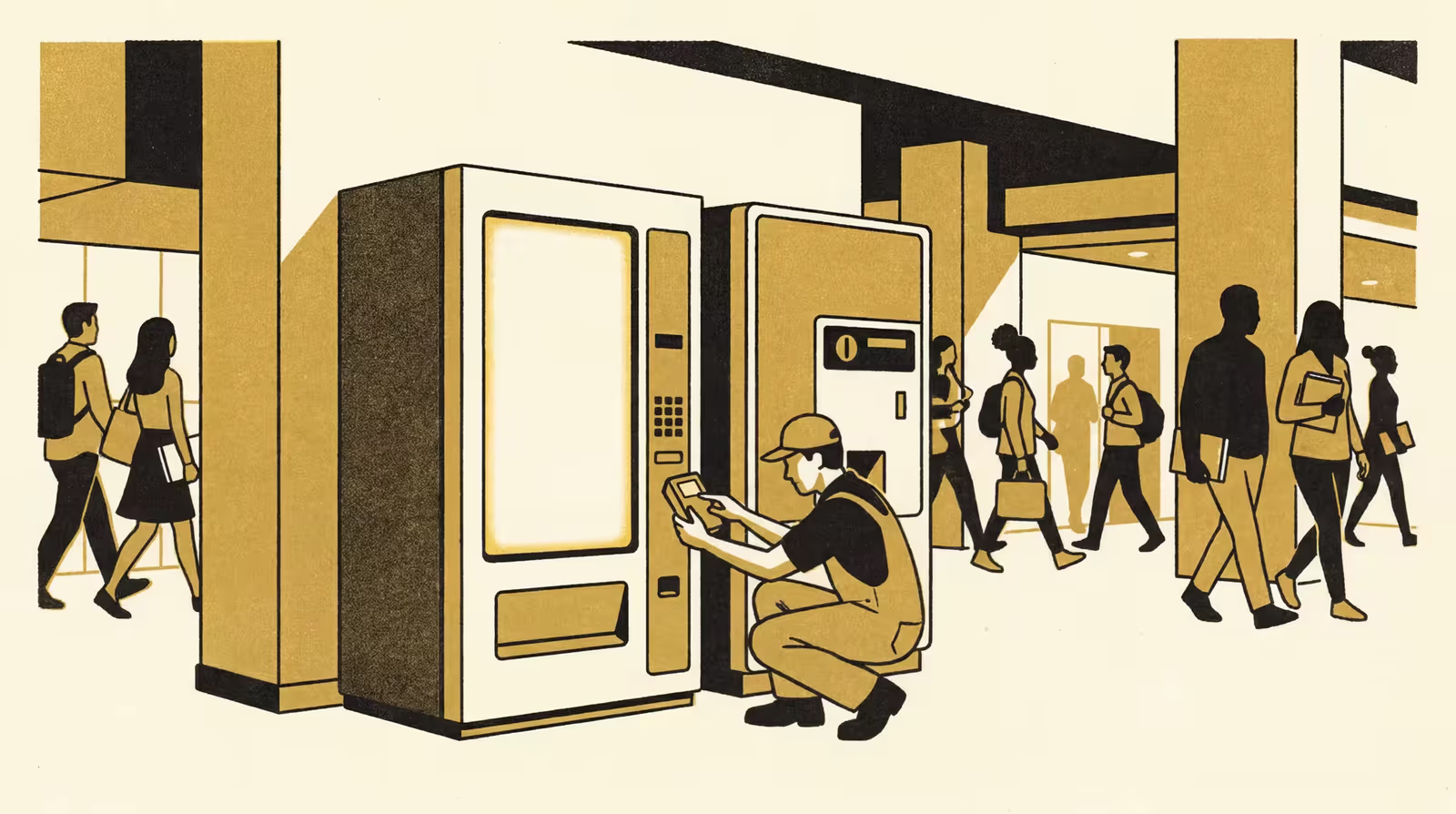
A School of Continuous Improvement paper audits the campus vending-machine upgrade against six months of transaction-time and complaint data, finding the modernisation credit was issued before the evidence existed to support it.
A six-month before-and-after study finds transaction times unchanged and complaint tickets roughly doubled, against a modernisation credit issued on installation day
Six months of point-of-sale timestamps, six months of facilities-helpdesk tickets, and one installation date in between: that is the audit trail behind the University’s newest look at its own modernisation programme.
A new paper from the School of Continuous Improvement checks a credit the University’s Digital Experience Index had already logged. When touchscreen, tap-payment vending machines replaced the coin-slot fleet across three buildings on a single installation day, the Index recorded a full efficiency point for the change before six months of usage existed to say whether it had earned one. Dr Mirela Hanke and Dr Bram Ntuli collected the evidence anyway.
Working from more than sixty thousand timed transactions and the tickets logged against the machines before and after the swap, the pair found average transaction time essentially unchanged, while tagged complaints roughly doubled. A further check of the onboarding screen fitted to two of the nine machines found no measurable difference either way.
The School counts crediting its own instruments among the processes worth putting through the same audit it runs on everyone else’s programmes.
This audit didn’t need a comparison group to be worth running; it needed a scorecard entry that had already been made. What we learned about ourselves is how easily that kind of gap gets filled before there is data to fill it with.
— Dr Hanke, Postdoctoral Fellow in the School of Continuous Improvement
“Whether the Index revisits its own credit is not something this audit can decide,” said Dr Ntuli, Lecturer and Convenor of Improvement Grand Rounds. “But the next scheduled review will have six months of data in front of it that the first one didn’t, and that seems the more useful place to leave this.”
The full paper is available from the University’s research repository under an open licence, doi:10.5555/slop.vcpl4k.