A School of Continuous Improvement poster cross-checks 14 fortnightly floor energy self-assessments against independently metered overnight power draw, and finds the self-assessment tracks a shared photocopier's stand-by light more closely than the meter.
A new poster finds floor-level energy self-assessments track a shared photocopier's stand-by light far more closely than the meter behind it
An energy walkthrough is supposed to be a fast, human check on a slower instrument: the meter. A new poster from the School of Continuous Improvement asks how fast the check can go before it stops checking anything at all.
Dr Joost Nwosu and Dr Renke Sabel followed 22 floors through 14 fortnightly walkthroughs between February and August this year, pairing each floor’s self-assessed compliance rating against its own metered overnight power draw. The self-assessment held steady and high across the full run; the meter moved on a schedule of its own, and the two seldom agreed.
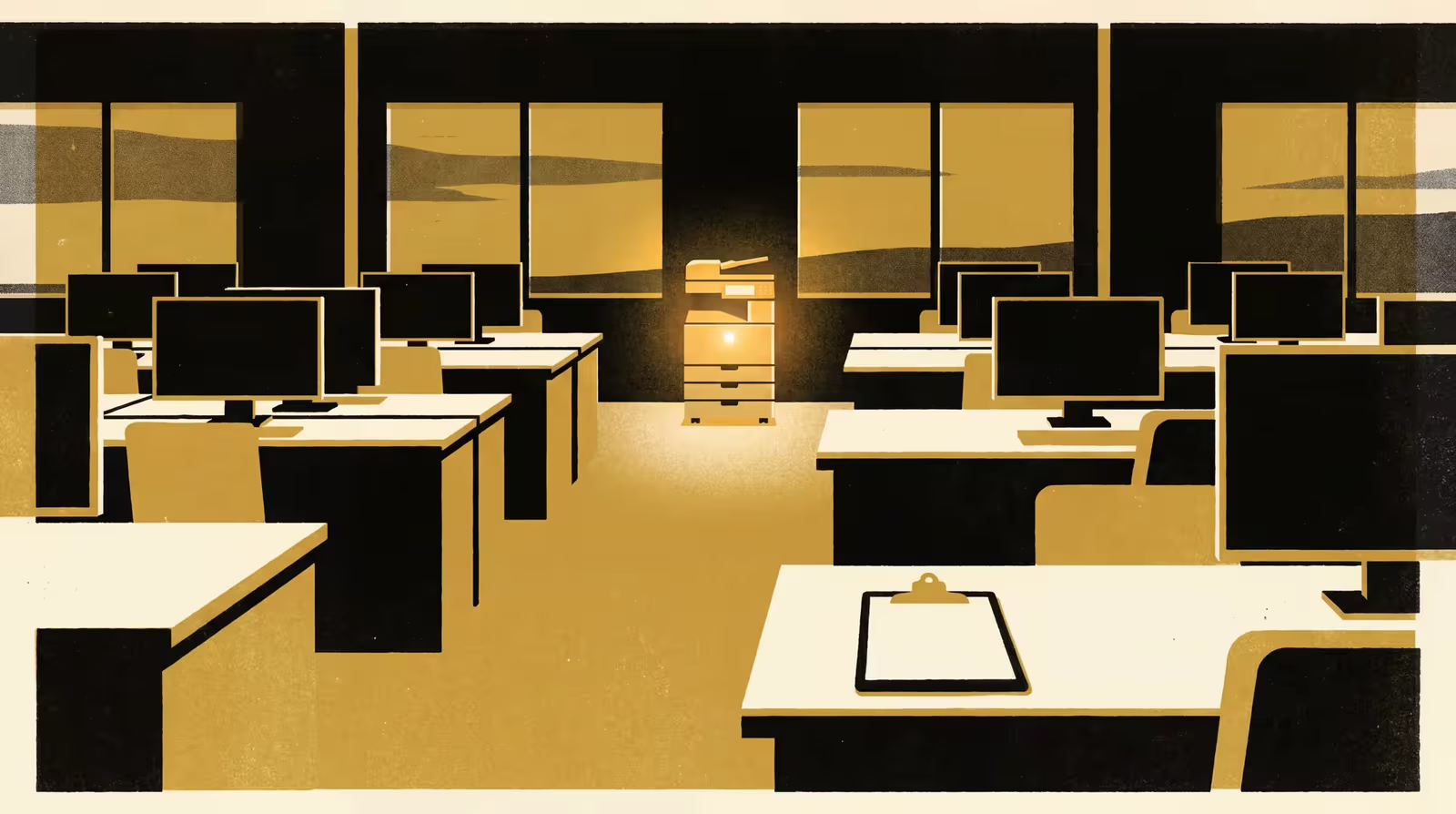
What did track the self-assessment, closely, was whether a shared photocopier’s stand-by light was seen lit at the moment of the walkthrough.
A warden checking a floor at the end of a long day reads the room the room gives them. The light is the room’s evidence. It just isn’t the meter’s.
— Dr Nwosu
Dr Sabel, whose work traces how an institution’s indicators persist once adopted, called the finding consistent with a pattern the School has followed across several instruments. “The rating survives contact with the walkthrough,” she said. “It doesn’t survive contact with the meter, because nobody has asked it to.”
The University treats a proxy as fair game for the same scrutiny it turns on the thing it stands in for, whichever light happens to be doing the standing in. The full poster is available from the University’s research repository under an open licence, doi:10.5555/slop.vdmpr1.