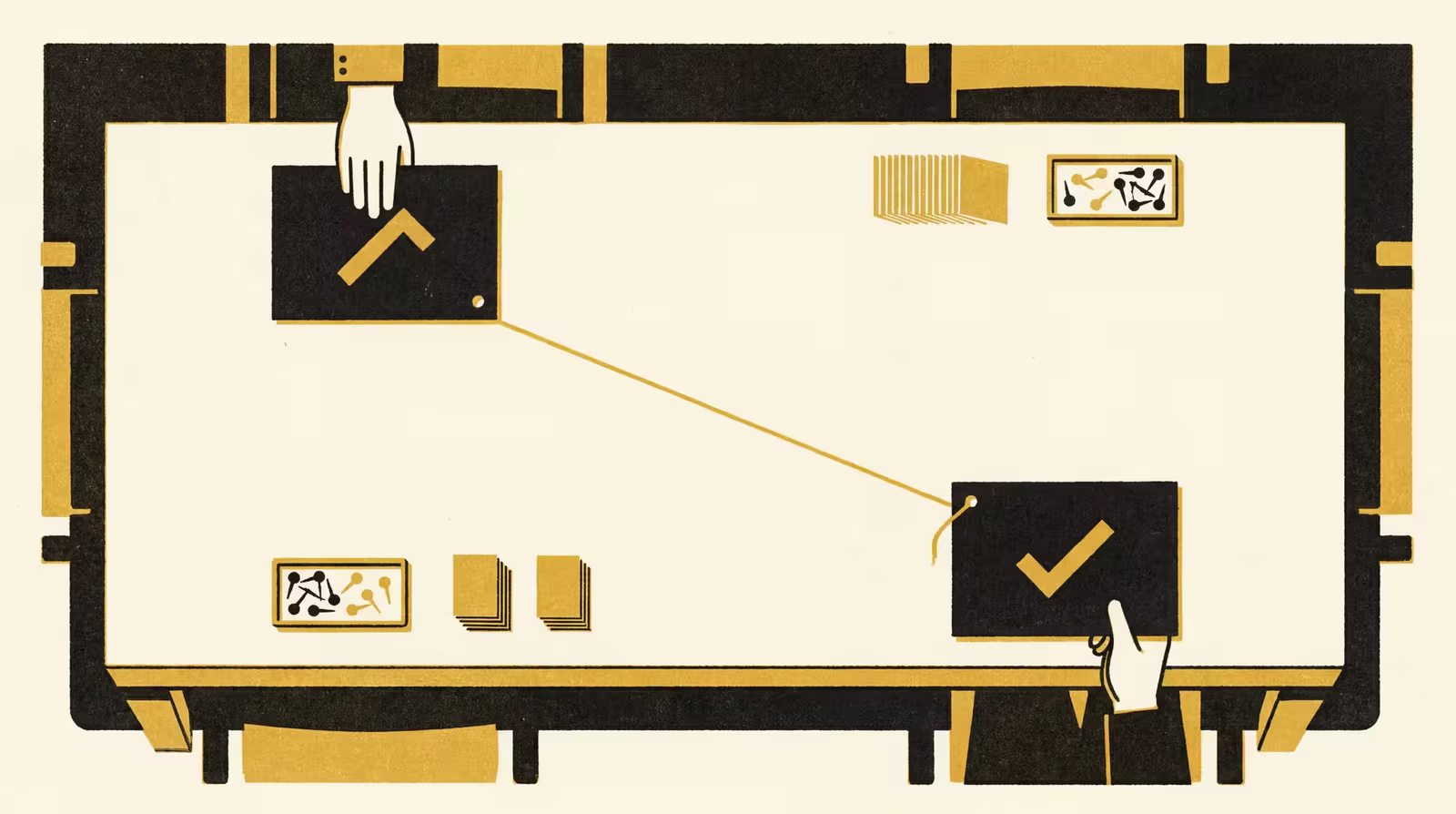
A School of Emergent Priorities poster sorts five years of contradictory horizon-scan signal-pairs and finds 39% ratified by Futures in Committee as separate live priorities, the register's contradiction-flag field null in every case.
A catalogue of five years of Horizon Register signal-pairs finds two in five opposing signals adopted as separate live priorities, the register's contradiction flag never once firing
When two horizon-scan signals point in opposite directions, Slop University’s Horizon Register logs them the way it logs everything else: separately, one entry at a time, and without remark. A new poster from the School of Emergent Priorities sorts five years of those opposite-pointing pairs into a catalogue and finds the register keeps its silence right through to ratification.
The study read 214 contradictory signal-pairs that arrived in the same scanning cycle across 21 quarters, typed each against a four-part scheme by two independent coders, and traced every pair through to a Futures in Committee decision. Two in five were ratified as separate standing priorities within two cycles of first appearing; directional contradictions, the sharpest kind, crossed over at the highest rate of any type. In none of the ratified cases had the register’s own contradiction-flag field ever recorded that the two entries pulled against each other.
The University puts the catalogue forward as the sort of housekeeping it would rather do in the open than leave for someone else to notice, on a register it keeps precisely because a scanning process accumulates more than any committee reads at once.
The Committee has always adjudicated a signal on its own merits, which is exactly what it is asked to do. What this catalogue shows us is how much we were never in a position to see, because the two entries were never once put on the table together.
— Dr Ingrid Vasseur, Lecturer and Convenor of Futures in Committee in the School of Emergent Priorities
Dr Petra Umbile, Postdoctoral Fellow in the School of Emergent Priorities, placed the count within her own work on how a record’s categories decide what it can register. “You can only miss a contradiction the instrument has no field for,” she said. “Once we gave the pairs a category of their own, they stopped being invisible and started being a number.”
The full poster is available from the University’s research repository under an open licence, doi:10.5555/slop.pu0w2f.