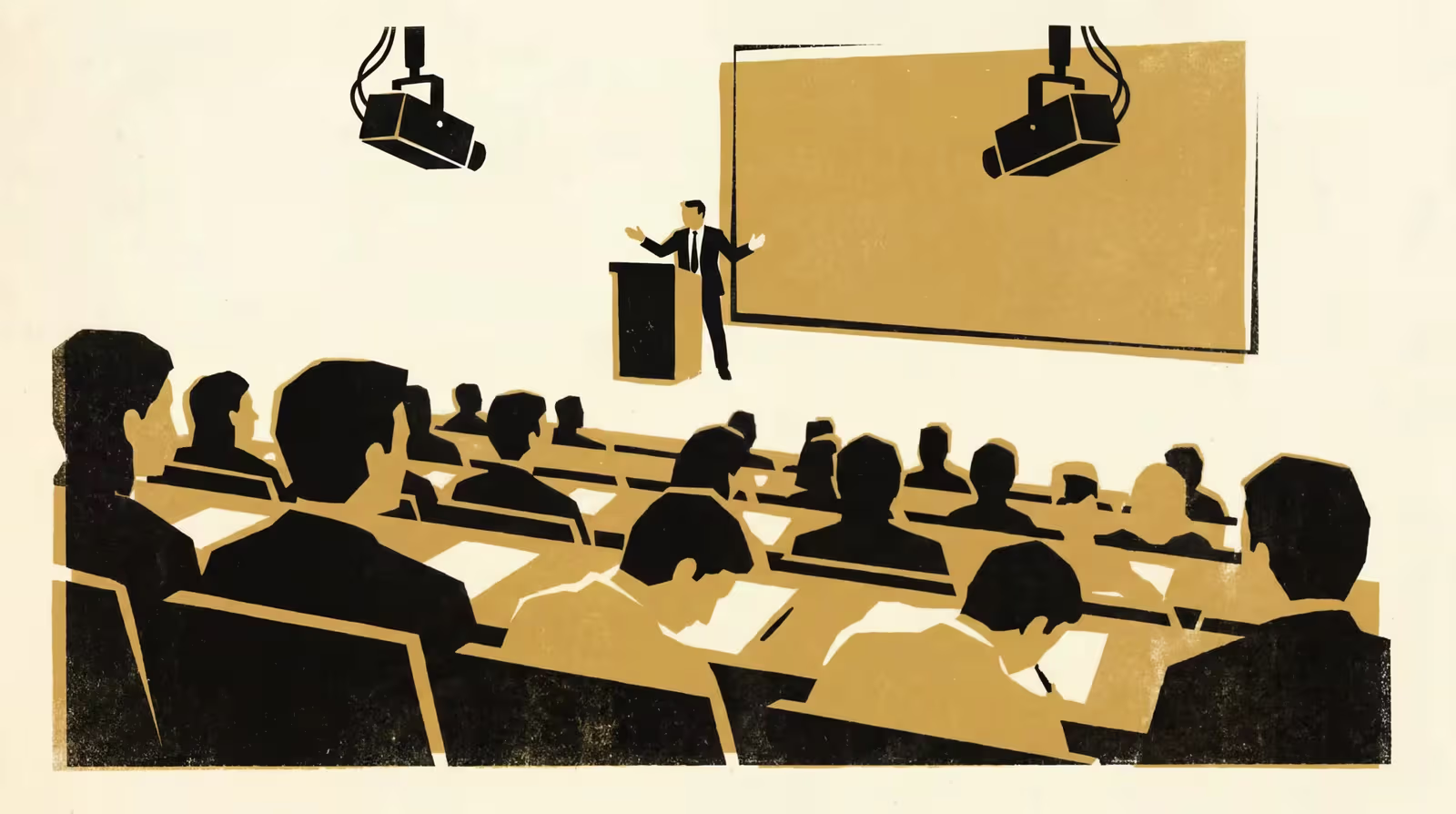
New findings from the School of Continuous Improvement suggest that as lecture-capture systems grow more capable, students remember less of what was taught.
As the capture system grows more capable, students remember less of what was taught
Researchers at the School of Continuous Improvement have released new findings on the relationship between lecture-capture sophistication and student recall, drawing on three semesters of recordings across the University’s teaching theatres.
Comparing recall scores across six theatres running different generations of camera automation, the team related each theatre’s installed capability to how much of the lecture students could recount two days later, isolating the rate of automated camera-switching as the strongest correlate of the pattern. The release marks a significant milestone in the University’s ongoing work on measurement systems that improve the things they measure.
The pattern is a reminder that a system built to capture everything doesn’t automatically capture what matters.
— Associate Professor Casimir Beng, who leads the Adaptive Metrics Lab
The team is careful to note that the relationship describes an association rather than an intervention, and that a single well-placed camera can still outperform a whole capability tier.
“There’s a genuine research question underneath this, and we’re glad to be the ones asking it,” said Dr Osei Vandermeer, a Research Fellow in the School of Continuous Improvement.
The full poster is available from the University’s research repository under an open licence, doi:10.5555/slop.gc05wo.